How to Handle Resin Lens Molds in Automated Production?
In resin lens production, the upper and lower mold parts need to be separated and collected after the molding and de-gating process.This may sound like a simple handling task, but there are a few challenges in practice.First, the separated mold parts are relatively fragile, making conventional suction gripping less suitable for this application. Second, resin lens molds come in different curvatures, edge profiles, and sizes. The gripper needs to adapt to these variations while keeping a stable grip.Another important point is surface protection. During repeated handling, contact between the gripper and the mold should not cause unnecessary wear or damage.
How Can Soft Grippers Help?
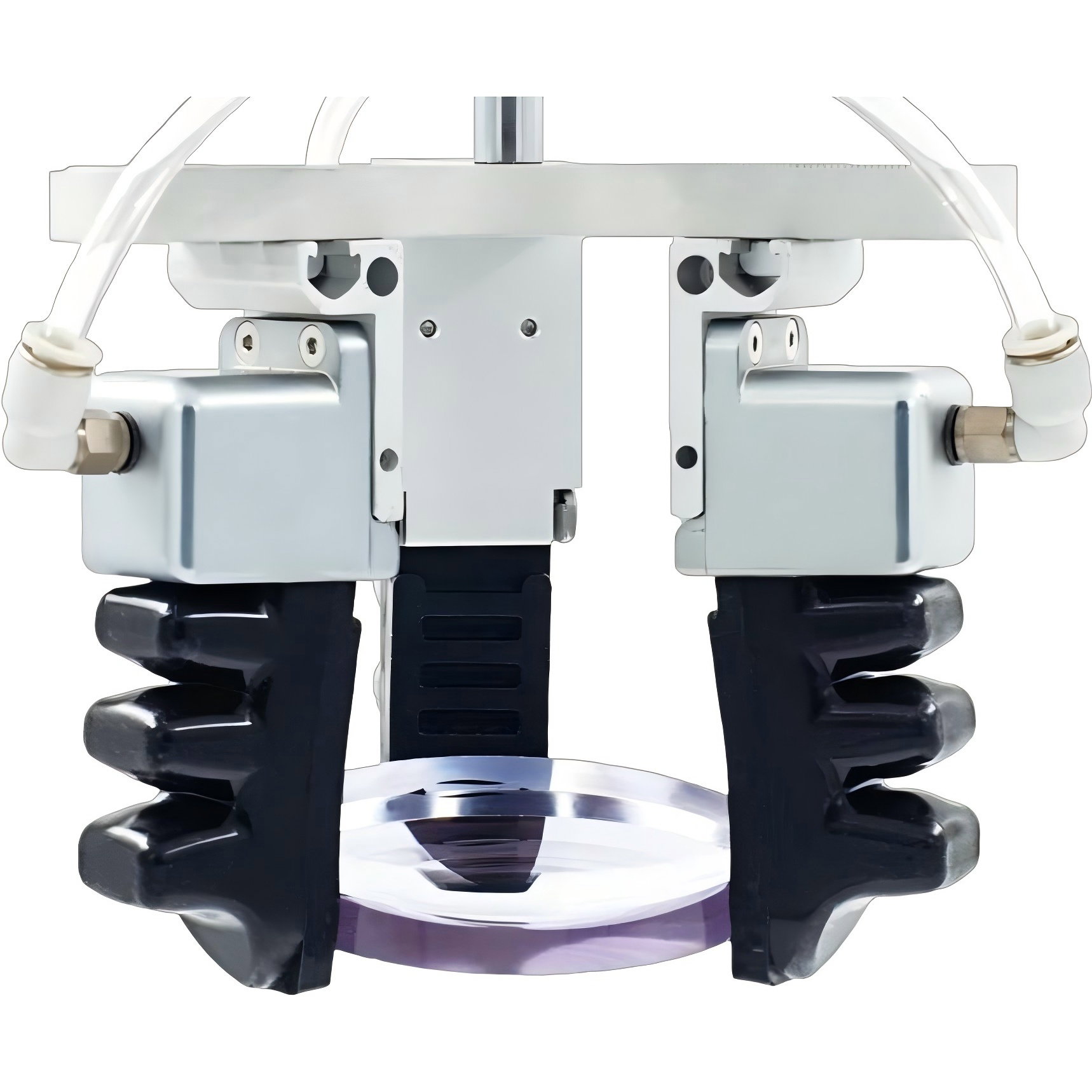
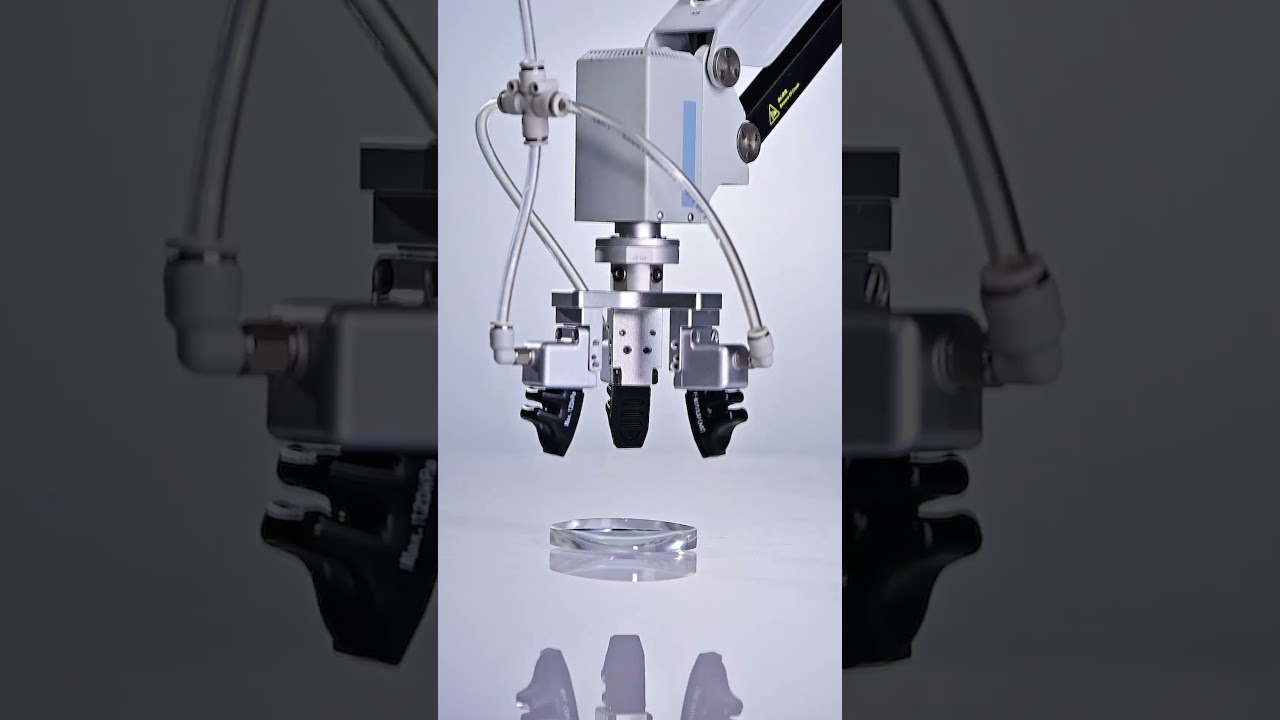
For this application, we used customized soft fingers made from a specially selected material to handle the resin lens molds.Unlike rigid grippers, soft fingers can deform to some extent when they come into contact with the workpiece. This allows them to adapt to different mold shapes and contours.There are several benefits to this approach:
- Gentle contact: Soft materials help reduce the risk of surface damage during gripping.
- Shape adaptability: The fingers can adapt to different curvatures, edges, and mold sizes.
- Stable gripping: Multiple soft fingers work together to hold the mold securely during handling.
- Automated handling: The gripper can be integrated into an automated process for collecting separated mold parts.
The current solution can handle approximately 500–800 pieces per hour.
Recommended Soft Gripper Configuration
For this application, the recommended configuration includes:
| Product | Model | Quantity |
|---|---|---|
| Finger Module | FMA-B5V4/LF1[H] Customized Version | 4 |
| Slide Mounting Plate | SMP-4S | 1 |
| Flange Connect Module | FCM-R03 | 1 |
The four customized soft fingers make contact with the molds and handle the gripping task. Together with the slide mounting plate and flange connect module, they form the complete gripper assembly.
Different Workpieces Need Different Gripping Methods
Not every workpiece is suitable for suction cups or rigid grippers.For parts with delicate surfaces, different shapes, or varying dimensions, the way a gripper makes contact with the workpiece can make a real difference.This resin lens mold handling case is one example of how soft grippers can be used in consumer goods manufacturing. By adapting the finger material and structure to the workpiece, automated handling can better meet the needs of different production applications.