Soft Finger Gripping a Hamburger: Stable Handling of Soft Food
A hamburger may look easy to pick up, but it’s not always that simple when you put it on an automated production line.The bun is soft and its surface isn’t perfectly flat. Add the patty, vegetables, and sauce, and the shape of each hamburger can vary a little.If you grip too hard, the bun can get squashed or the sauce can be pushed out. If you grip too lightly, the hamburger may slip during handling.So the real question isn’t just whether we can pick it up. It’s how to grip it securely without affecting its shape too much.
How do the soft fingers grip it?
For this application, we use soft fingers to handle the hamburger.When the fingers make contact, they conform to the shape of the hamburger instead of gripping it with a fixed, rigid contact point.This helps with a few practical things:
- Less pressure on the soft bun
- Adapts to small variations in size and shape
- Keeps the hamburger stable during handling
- Reduces visible deformation caused by gripping
For food handling, that matters.A hamburger isn’t a metal part that needs to be clamped tightly. If we can pick it up, move it, and place it down reliably while keeping its original shape as much as possible, that’s the goal.
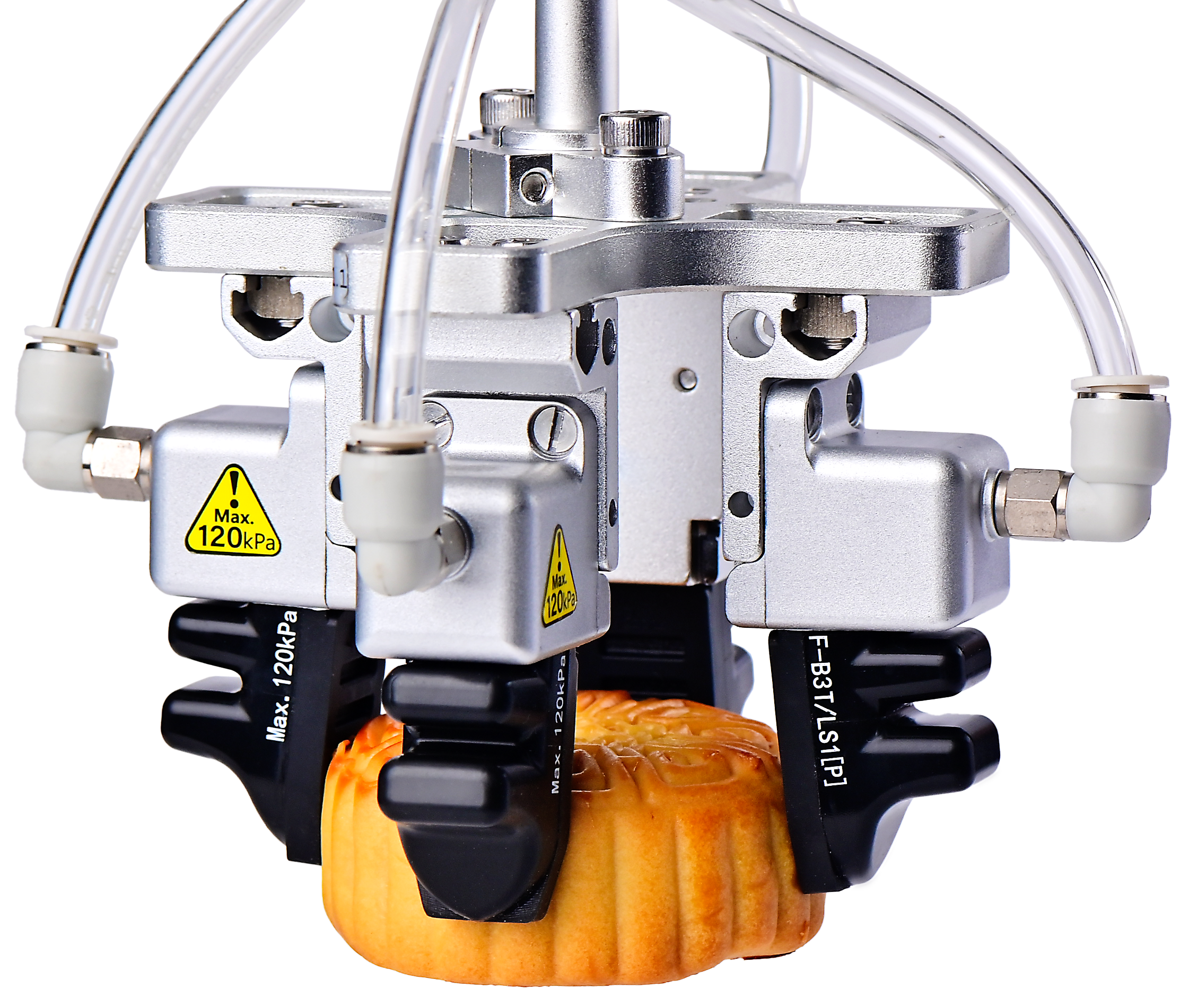
And it’s not just about hamburgers
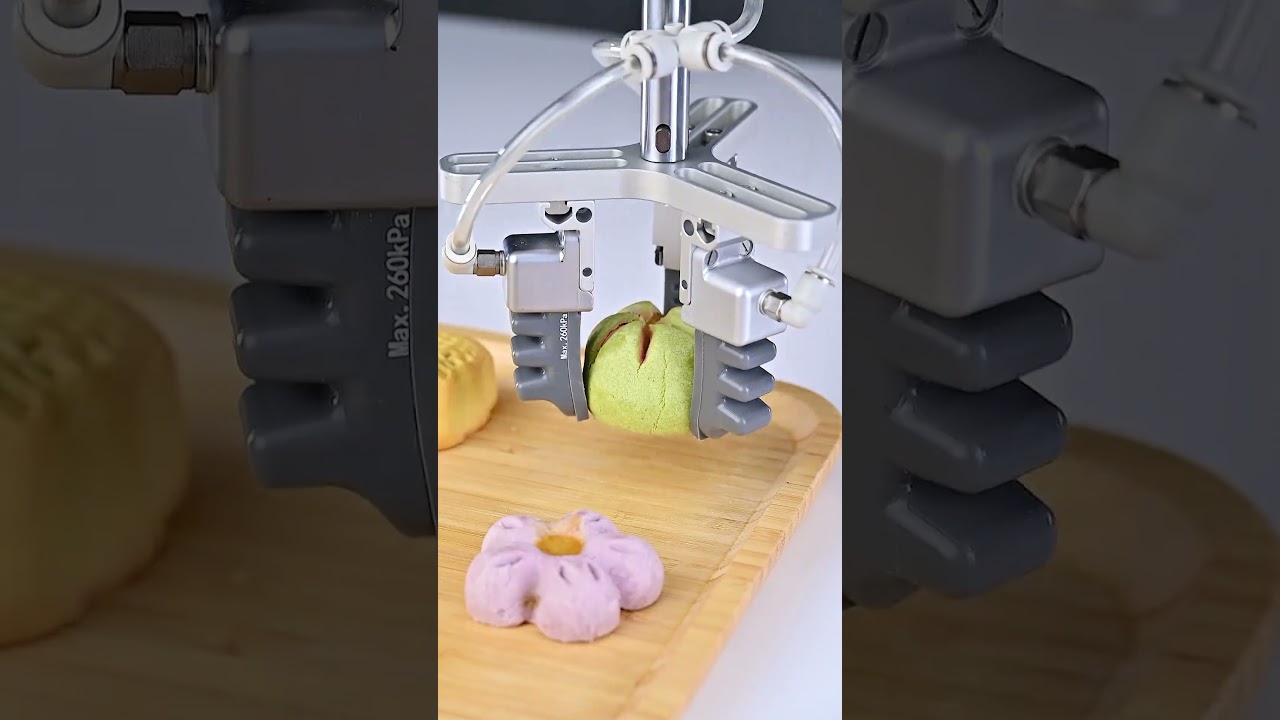
The hamburger is just one example.Bread, pastries, sandwiches, and other soft or easily deformed foods can run into similar problems when they are handled automatically.Sometimes, the problem isn’t that the robot isn’t accurate enough. It’s that the way the gripper contacts the food needs to be different.Soft fingers are one option for this kind of application.