Soft Gripper for Composite Battery Circuit Board Conveyor Handling
Why Vacuum Cups Struggle with Composite Battery Boards
In modern battery manufacturing, many production lines need to transfer composite battery circuit board sheets from a conveyor belt into collection trays.At first glance, this appears to be a simple pick-and-place task. However, in practice, many manufacturers experience unexpected problems when using traditional vacuum cups.Typical issues include:
- Workpieces slipping during transfer
- Occasional dropped parts while the robot is moving
- Inconsistent suction caused by surface texture
- Multiple sheets shifting during batch handling
- Reduced production efficiency due to rework
For fragile battery components, even a single dropped part can result in product damage, process interruption, or quality concerns.As production speed increases, the limitations of vacuum gripping become even more obvious.
The Challenge
The customer needed an automated solution capable of:
- Picking multiple composite battery board sheets simultaneously
- Grasping directly from a moving conveyor
- Transferring the parts into collection trays
- Maintaining stable handling without dropping parts
- Protecting delicate composite surfaces from damage
Because several parts are transported together, the gripping system must securely hold the entire bundle while accommodating slight position differences between workpieces.
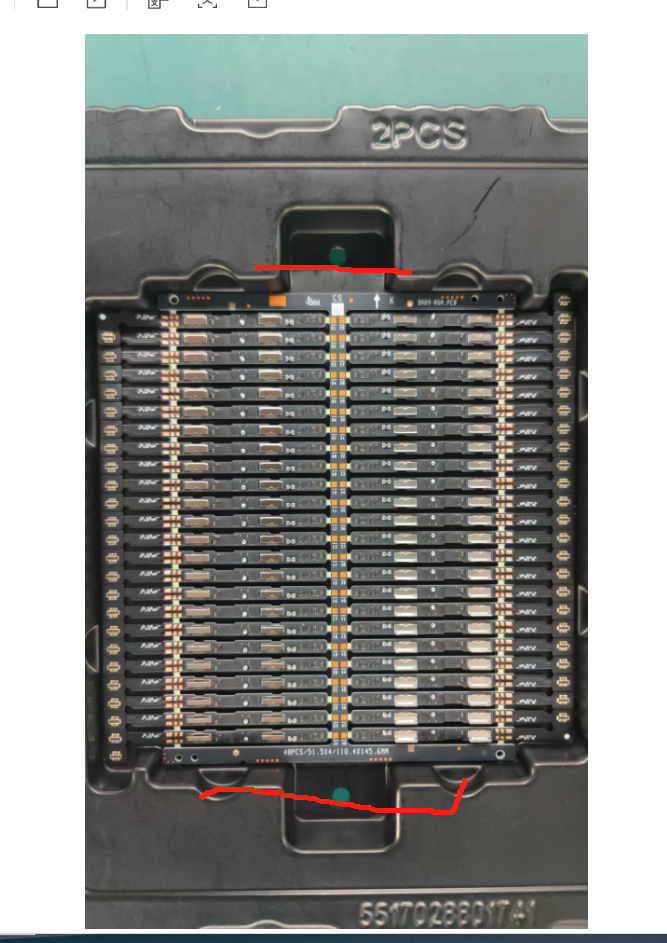
Instead of relying on suction, the customer replaced the vacuum system with a soft robotic gripper.The flexible fingers gently wrap around the group of battery board sheets, creating a stable mechanical grip without requiring a perfect surface seal.Unlike vacuum cups, the gripping force is distributed across multiple contact points, allowing the robot to maintain secure handling throughout the entire motion.This greatly improves process reliability.
Advantages of the Soft Gripper
1. Stable Multi-Part Gripping
The flexible fingers securely hold multiple workpieces together during transportation.Even under rapid robot movement, the parts remain stable without slipping.
2. No Dependence on Surface Vacuum
Since gripping does not rely on air sealing, variations in surface finish or material texture have little impact on performance.This provides much higher process consistency.
3. Gentle Contact
The soft gripping surfaces reduce concentrated pressure on the battery board, helping protect delicate composite materials from scratches, dents, or deformation.
4. Adaptability
Minor dimensional variations between workpieces can be automatically accommodated without changing tooling.This reduces setup time and increases production flexibility.
5. Improved Automation Reliability
Replacing unstable suction with adaptive gripping significantly reduces dropped parts, minimizes downtime, and improves overall production efficiency.
Choosing the right end effector is often more important than increasing robot speed.For composite battery circuit board handling, vacuum cups may suffer from occasional dropped parts due to inconsistent suction.By switching to a soft robotic gripper, manufacturers can achieve stable multi-part handling, reduce product damage, and improve production reliability.As battery manufacturing continues to demand higher efficiency and greater consistency, flexible gripping technology offers an effective solution for conveyor-based automated handling tasks.