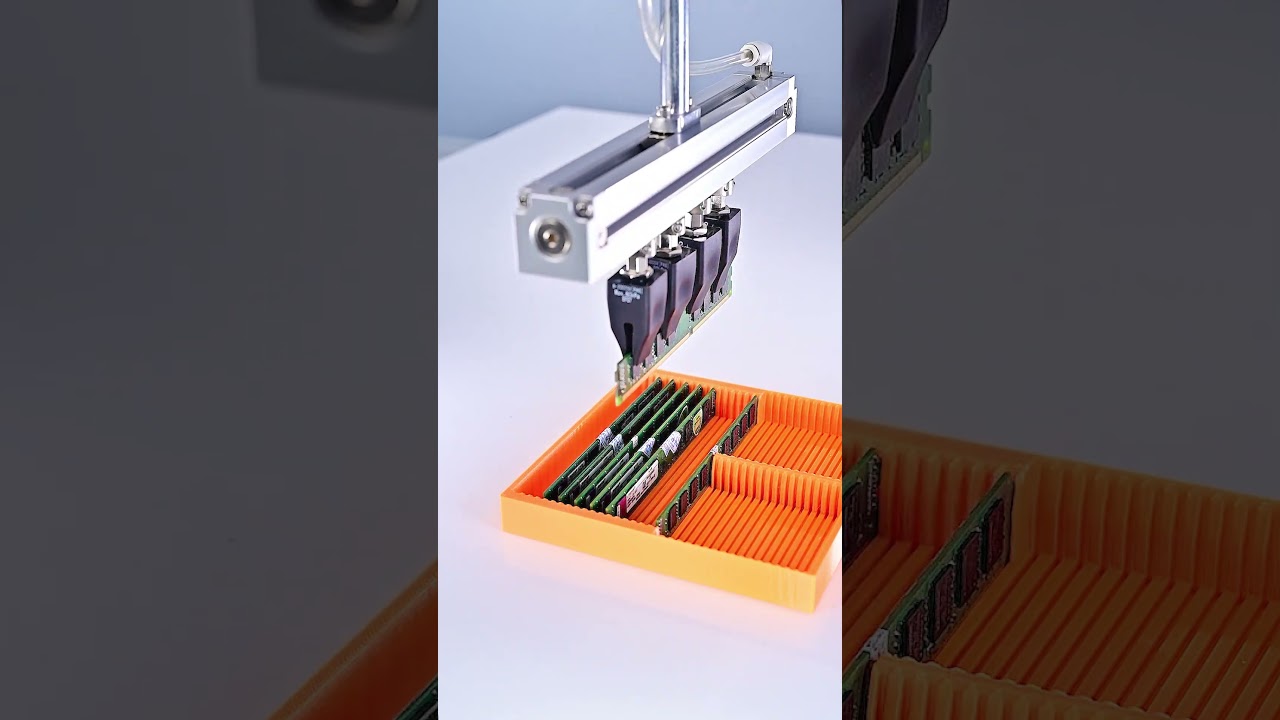
Soft Gripper Solution for Memory Module Tray Handling
In precision electronics manufacturing, automating memory module handling is far more challenging than it appears.
At first glance, it may seem like a simple pick-and-place task. However, once the process enters high-speed automated production, issues such as narrow tray spacing, fragile surfaces, gripping stability, and electrostatic discharge (ESD) quickly become critical challenges.Traditional gripping methods often struggle to meet the requirements of modern electronics automation lines, especially when handling densely arranged memory modules inside trays.
Why Memory Module Tray Handling Is Difficult
Memory modules are typically arranged vertically inside narrow trays with very limited spacing between each component. This creates several engineering challenges simultaneously.
1. Narrow Tray Space
The gap between memory modules is extremely small, requiring the gripper fingers to be thin enough to enter the tray without interfering with adjacent parts.However, thinner fingers often reduce structural rigidity, which can lead to instability during high-speed robotic movement.
2. Fragile Component Surfaces
Memory modules and electronic components are sensitive to excessive localized pressure. Traditional rigid grippers usually clamp from the edges, which creates:
- Limited contact area
- High concentrated force
- Increased slipping risk
- Potential scratches or deformation
For precision electronics manufacturing, even minor damage can affect product quality and yield rates.
3. Electrostatic Discharge (ESD) Risk
One commonly underestimated issue in electronics automation is electrostatic discharge.A gripping solution may appear mechanically stable, but static buildup during handling can still damage sensitive electronic components internally.For this reason, ESD-safe materials and anti-static gripping solutions are essential for memory module automation.
Why Soft Robotic Grippers Work Better
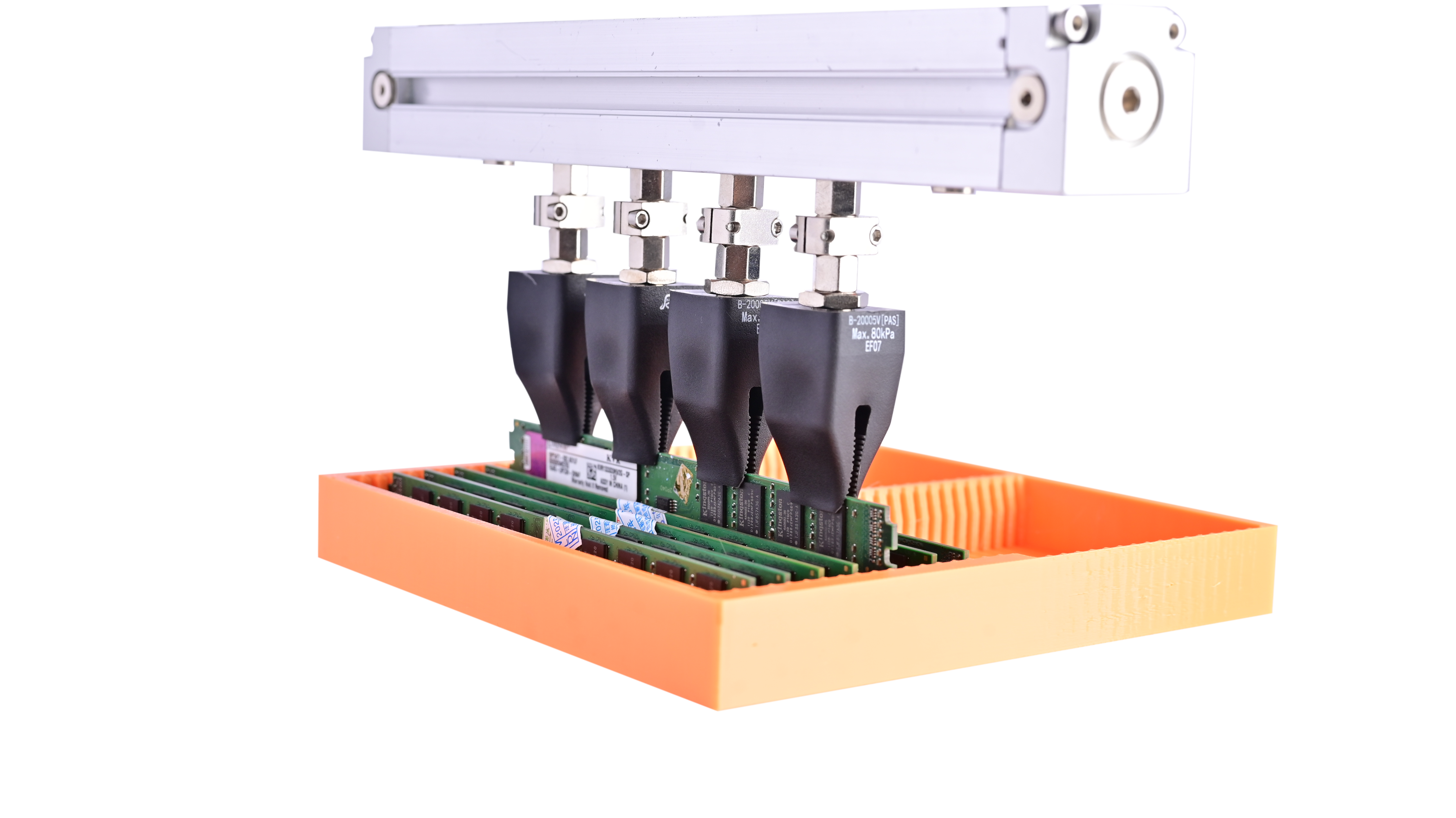
Compared with traditional rigid grippers, soft robotic grippers provide a more adaptive and stable handling solution for memory module trays.
Flexible Contact Structure
Soft gripper fingers can naturally adapt to slight dimensional differences while distributing pressure more evenly across the contact area.This helps reduce localized stress and minimizes the risk of damaging delicate electronic components.
Better Stability in High-Speed Handling
Instead of relying on excessive gripping force, soft grippers improve stability through adaptive contact and controlled pressure distribution.This becomes especially important during:
- High-speed pick-and-place operations
- Repeated automated cycles
- Dense tray handling
- Long production runs
Easy Access to Narrow Tray Gaps
The slender finger design allows the gripper to easily enter tightly packed trays while maintaining stable handling performance.
ESD-Safe Gripping
Anti-static soft gripper materials help suppress electrostatic buildup during handling, reducing the risk of ESD damage to sensitive components.
Engineering Focus: Stability Over Force
One important lesson in electronics automation is that stronger gripping force does not always mean better performance.In many memory module applications, the key is:
- Consistent gripping
- Controlled pressure
- Adaptive contact
- Long-term repeatability
Because the real challenge in automation is not simply picking up the part.It is achieving the same stable result thousands of times without damaging the product.
Soft Gripper Applications in Electronics Automation
Soft robotic grippers are widely used for:
- Memory module handling
- PCB loading and unloading
- FPC gripping
- Semiconductor tray handling
- Precision electronic component automation
As electronics manufacturing continues moving toward higher precision and faster cycle times, flexible gripping technology is becoming an increasingly important part of automation systems.