Soft Robotic Gripper for Bread Slice Layering and Food Automation
Solving the Challenge of Automated Bread Slice Handling with Flexible Grippers
In food production lines, handling bread slices automatically may seem simple, but it often brings unexpected challenges.Bread slices are soft, lightweight, and easily deformed during handling. Traditional vacuum suction cups may struggle with unstable gripping due to the porous surface of bread, while rigid mechanical grippers can apply excessive force and leave marks on the product.This makes bread handling automation a challenging application, especially when manufacturers need to maintain product quality while improving production efficiency.This case demonstrates how a soft robotic gripper can achieve stable and gentle bread slice layering and transfer in a food automation process.
Challenges in Bread Slice Automated Handling
In many food processing applications, bread slices need to be separated, transferred, and arranged before packaging or further processing.However, several factors make automated bread handling difficult:
- Soft texture and easy deformation
- Different thickness between products
- Strict requirements for surface protection
- Need for continuous and stable operation
Traditional gripping methods usually require precise adjustment according to a specific product shape. When product conditions change, problems such as slipping, dropping, or deformation may occur.For food processing robots, the ability to adapt to different product conditions is essential.
Soft Robotic Gripper Enables Gentle and Stable Gripping
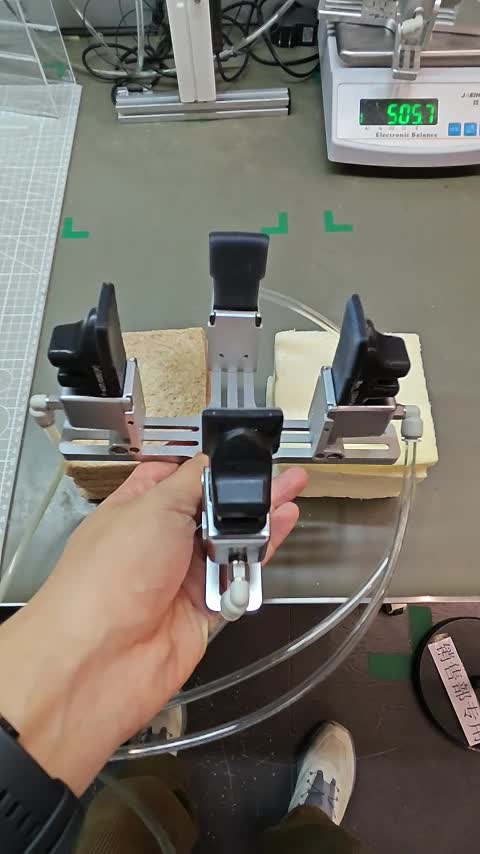
To address these challenges, this application uses a flexible gripper for food automation.With soft materials and an adaptive gripping structure, the soft robotic gripper can automatically adjust its contact position according to the shape and condition of the bread slice.During the gripping process, multiple soft fingers gently contact the bread surface and distribute the gripping force evenly. This reduces pressure concentration and helps prevent deformation during handling.After picking up the bread slice, the gripper smoothly transfers it to the designated position, completing the automated layering process.
Advantages of Soft Grippers in Food Handling Applications
Compared with traditional vacuum grippers and rigid mechanical grippers, soft robotic grippers provide better adaptability for delicate food products.
1. Protecting Soft Food Products
The flexible contact surface reduces gripping pressure and minimizes damage such as deformation or surface marks, making it suitable for products like bread, pastries, and other delicate foods.
2. Adapting to Product Variations
In food production, products may vary slightly in size, thickness, or shape. A flexible robotic gripper can adapt to these differences without frequent mechanical adjustments.
3. Improving Automation Stability
Stable gripping performance helps reduce product drops and handling failures, improving the reliability of automated food processing lines.
Flexible Gripping Technology for Food Processing Automation
Beyond bread slice handling, soft robotic grippers can also be applied to various delicate food automation scenarios, including pastries, fruits, vegetables, and packaged food products.As food manufacturers continue to improve automation efficiency, robots need more than speed — they also need the ability to handle products safely and flexibly.By providing human-like adaptive gripping capabilities, soft gripper technology offers a practical solution for food processing automation and intelligent manufacturing.