SIM Card Tray Handling: A Small Part That Needs a Flexible Gripping Solution
Why is handling a SIM card tray not as simple as it looks?
SIM card trays are typically made through injection molding. They are lightweight, thin, and compact, with slightly different dimensions across phone models.These features can make automated handling a little tricky.For example, the tray has no large, flat surface for a conventional suction cup to grip. Meanwhile, a pneumatic cylinder gripper may require a customized contact profile to match the shape of the part. When switching between different tray models, the fixture may also need to be adjusted or replaced.So, how can we make the gripping process simpler?
A Soft Gripper That Adapts to Different Tray Sizes
In this application, we used a soft gripper to handle SIM card trays from different phone models.Unlike rigid gripping tools, the flexible fingers can adapt to the shape and slight dimensional variations of the workpiece. They make direct contact with the thin-walled tray while helping avoid deformation or surface damage during gripping.Another useful feature is the gripper's adaptive gripping range. Trays from multiple models within the same product series can be handled without replacing the gripping fixture.This also makes production changeovers much easier, reducing model switching and commissioning time to within one minute.
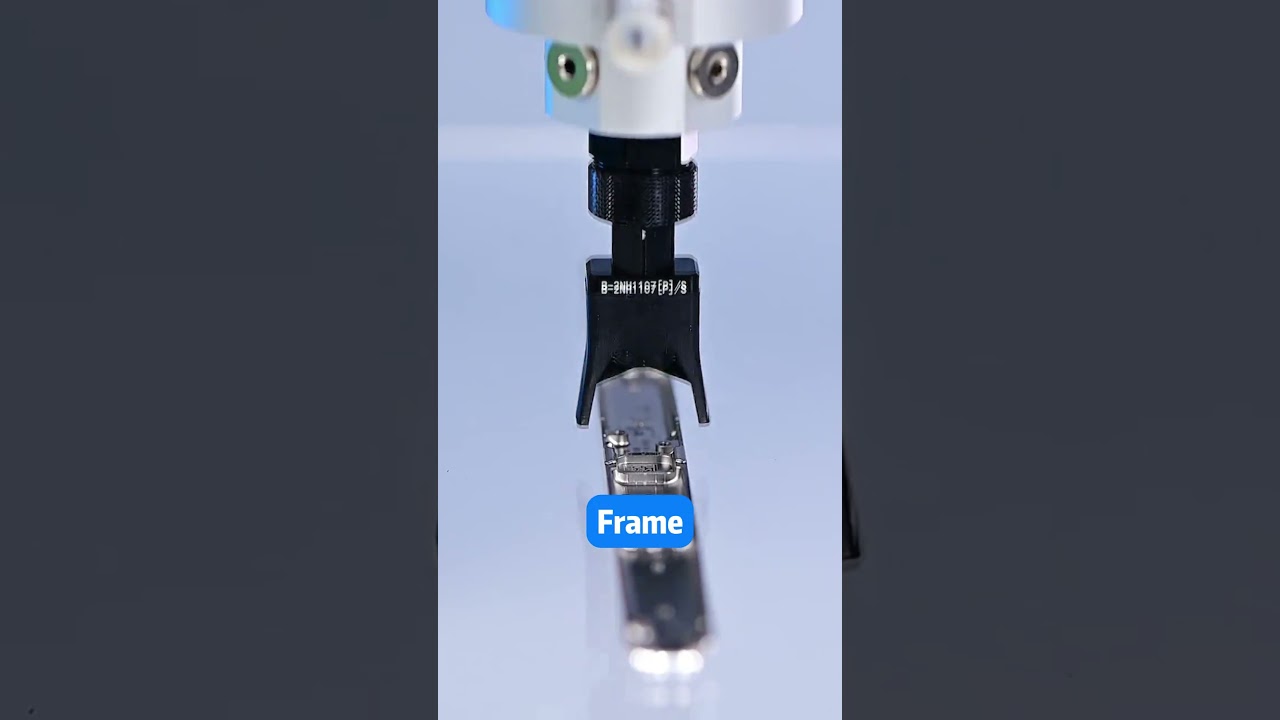
Lightweight Design for High-Speed Handling
Each soft gripper weighs just 7.3 g, making it suitable for lightweight robotic applications.Combined with a SCARA robot, the setup achieves:
- Repeat positioning accuracy of ±0.05 mm.
- Lightweight gripping for high-speed handling.
- Flexible adaptation to different tray dimensions.
- Quick product changeover without fixture replacement.
More Than Just SIM Card Trays
The same gripping challenges can also be found in many other small injection-molded parts.For example:
- Small plastic housings and electronic components.
- Thin-walled plastic frames and covers.
- Small connectors and precision plastic parts.
- Lightweight components with irregular edges or limited gripping surfaces.
For these applications, the key is not simply to grip the workpiece firmly. It's about finding a suitable contact method that accommodates its shape, material, and dimensional variations.A soft gripper can be a practical option when conventional gripping methods become complicated.Sometimes, making the gripping tool more adaptable is easier than redesigning the fixture for every new part.