Glass Optical Prism Handling: How Soft Robotic Grippers Help Prevent Surface Marks
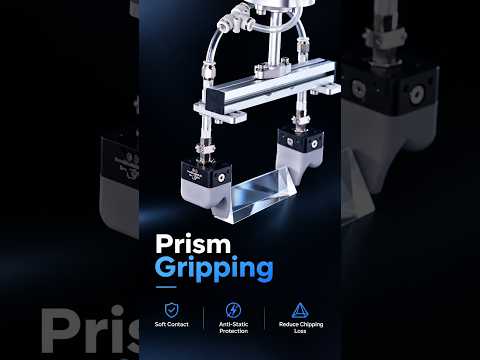
Handling glass optical prisms in automated production can be more challenging than it looks. The part may be small, the movement may be simple, but keeping the surface free from marks is a different story.For precision optical components, even minor surface marks can become a quality concern. The challenge is not just to pick up the part securely, but to do so without leaving visible traces on its surface.In this application, Rochu explored a soft robotic gripper solution after the customer's previous suction-based approaches failed to deliver the required surface quality.
1. The Challenge: Suction Cups Kept Leaving Marks
The customer initially used vacuum suction cups to handle glass optical prisms. The goal was straightforward: achieve reliable picking and transfer while protecting the product surface.However, the results were not satisfactory.The customer tested both anti-static suction cups and non-marking suction cups, but neither fully resolved the problem. Marks still appeared on the glass surface during handling.Repeatedly changing the suction cup material or type did not produce the desired result. The customer needed an alternative gripping method that could handle the prisms reliably without compromising surface quality.The challenge was no longer just how to hold the prism securely. It was how to handle it without leaving visible marks.
2. The Solution: Replacing Vacuum Suction with Soft Robotic Gripping
To address the issue, Rochu proposed using a soft robotic gripper to handle the glass optical prisms.Unlike vacuum suction cups, which rely on a sealed contact area and negative pressure to hold a workpiece, a soft gripper uses flexible fingers to make contact with the part and adapt to its shape.This alternative approach offered several potential advantages for the application:
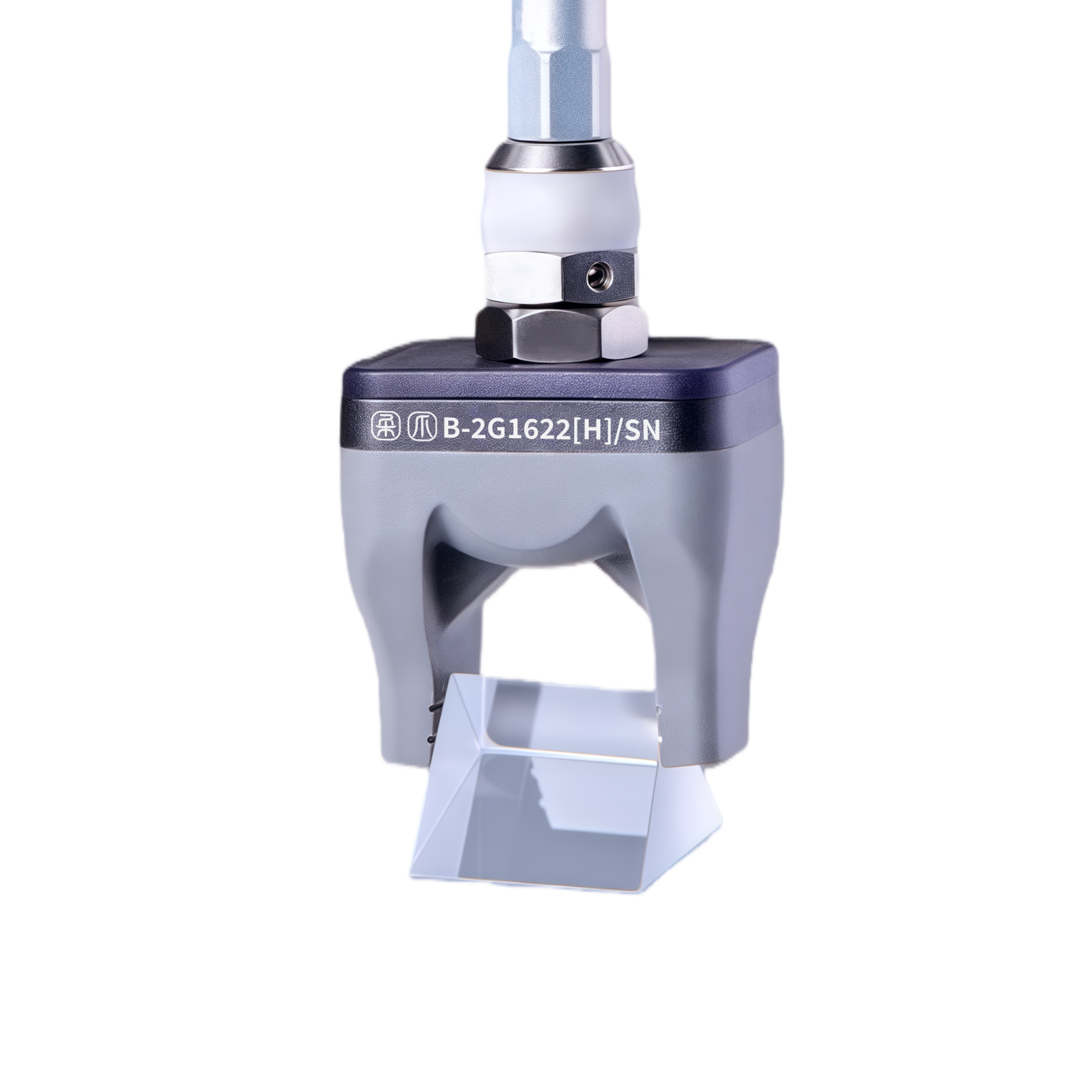
- Flexible contact: Soft fingers can conform to the workpiece's contact profile, helping reduce localized pressure associated with rigid contact surfaces.
- Stable gripping: Finger geometry, contact positions, and gripping force can be selected according to the workpiece and handling requirements.
- Reduced surface marking: In this application, the soft gripper achieved the required handling result without leaving visible marks on the glass prism surface.
The key was not simply replacing one end-of-arm tooling (EOAT) component with another. It was choosing a different contact method to meet the customer's surface-quality requirements.
3. The Result: Reliable Handling Without Visible Surface Marks
With the soft gripper solution, the glass optical prisms were successfully picked up and handled without visible surface marks in the application test.This addressed the issue that had remained unresolved after testing different types of suction cups.For precision glass handling, evaluating a gripping solution requires more than checking whether the workpiece can be picked up. The condition of the product after gripping and transfer matters just as much.This case demonstrates how a soft robotic gripper can serve as an alternative to vacuum suction cups when surface marking becomes a concern.
4. Where Else Can Soft Grippers Be Used?
The same challenge can arise in other automated handling applications where surface protection is a priority.Depending on the workpiece geometry, material, and process requirements, soft robotic grippers may be worth evaluating for:
- Glass and precision optical components
- Precision parts with strict surface-finish requirements
- Workpieces prone to scratches, pressure marks, or contact damage
- Irregularly shaped components that benefit from conformal gripping
Each application requires its own assessment. Workpiece weight, geometry, surface characteristics, gripping position, and cycle time all influence the final gripper design and operating parameters.