Thin Glass Panel Handling: Replacing Vacuum Suction Cups with Soft Fingers
Vacuum suction cups are widely used for automated glass panel handling. However, they are not suitable for every application.In this project, the customer had a specific requirement:The suction cup was not allowed to contact the surface of the glass panel.This requirement ruled out the conventional vacuum gripping method and led us to test another approach: using soft fingers instead of suction cups to handle the thin glass panels.
Project Requirements: No Contact with the Glass Surface
The glass panels in this batch had relatively strict handling requirements:
- No suction cup contact with the glass surface
- Thin glass panel construction
- Stable handling during robotic movement
- Controlled gripping force
- No visible damage or unwanted marks on the panel
For conventional vacuum grippers, the main issue was not whether sufficient suction force could be generated. The challenge was that the contact method itself did not meet the customer's process requirements.So we looked at the problem from a different direction.
From Vacuum Suction to Soft Finger Gripping
Instead of lifting the glass panel directly from its surface, the soft gripper uses flexible fingers to grip the panel from the side.This allows the gripping system to avoid direct contact with the main surface of the glass while still providing a stable grip for robotic handling.In simple terms:A suction cup lifts the panel from the surface. A soft finger gripper grips it from the side.This difference in gripping method can be important when surface contact needs to be minimized or avoided.
Why Use Soft Fingers for Thin Glass Panels?
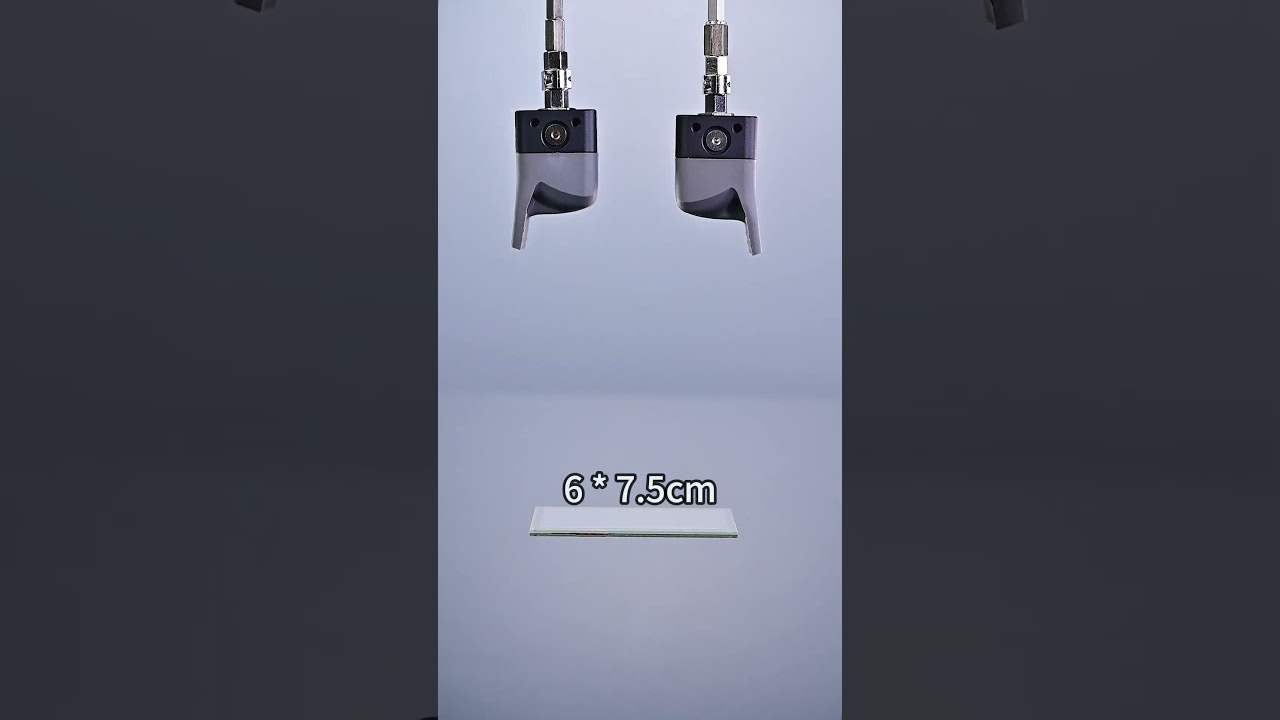
Thin glass panels are not ideal for rigid clamping.With a conventional rigid gripper, the contact area and gripping force can be concentrated in a relatively small area. If the force is not properly controlled, this can create unnecessary stress on a thin workpiece.Soft fingers offer a different approach.Their flexible structure allows the fingers to deform slightly when contacting the workpiece, helping them conform to the gripping area rather than relying on a completely rigid contact surface.For this glass panel handling project, we focused on several factors.
1. Gripping Position
The soft fingers grip the panel from its side, avoiding direct contact between a suction cup and the main glass surface.
2. Gripping Force
The gripping parameters can be adjusted according to the thickness, weight, and mechanical characteristics of the glass panel.The goal is not simply to increase gripping force, but to use enough force to maintain stable handling without unnecessary pressure.
3. Handling Stability
During robotic movement, we observed whether the panel showed unwanted movement, slipping, or excessive vibration.Stable gripping is especially important when thin panels need to be transferred repeatedly in an automated production line.
4. Surface Protection
Another key consideration was the condition of the glass surface.By changing from surface suction to side gripping, the soft finger gripper can avoid the direct suction contact associated with conventional vacuum handling.
Replacing a Suction Cup Is More Than Changing the Gripper
The interesting part of this project is that the workpiece itself did not change.The gripping method changed.The original problem was:
The glass panel could not be contacted by a suction cup.
Instead of trying to optimize the suction cup further, we changed the way the robot interacts with the workpiece.The process moved from surface gripping to side gripping with soft fingers.This provides another possible approach for thin glass panels and other flat, delicate workpieces where direct surface contact is restricted.
Test Result
After testing, the soft finger gripper was able to grip and transfer the thin glass panels while avoiding direct suction cup contact with the main surface.For applications like this, the starting point is not always choosing a gripper first.It is often more useful to ask:Where can the robot make contact? Where can it not make contact? How much gripping force is required? And which part of the workpiece can actually be used for stable gripping?Once these conditions are clear, the appropriate robotic gripper and gripping method can be selected accordingly.For thin glass panel handling, especially where surface contact is restricted, soft fingers can be considered as an alternative to traditional vacuum suction cups.