Soft Gripper Solution for Hearing Aid & Earphone Component Picking in Foam-Lined Boxes
In this application, mixed-spec hearing aid and earphone components are stored in individual packaging boxes for downstream automated inspection.Each box contains one product, placed inside a foam-lined cavity. Operators manually load the parts, then the box is opened for robotic picking. After grasping, the soft gripper transfers the component to a vision inspection station.Key specifications:
- Box size: 121.7 mm × 92.5 mm × 80 mm
- Product position: approximately 2/3 depth inside the box
- Effective gripping depth: 10 mm
- Part orientation: open side facing upward
- Handling mode: random manual loading with high variability
Process Challenge
Although the workflow looks simple, the actual picking environment is highly unstable.The main issue comes from the upstream manual loading process:
- Parts are placed manually into foam-lined boxes
- Operator behavior is inconsistent and emotionally driven
- Product positioning is not standardized
- Components may be:
- tilted or skewed
- pushed too deep into the foam cavity
- partially exposed above the box surface
- Position deviation is large and unpredictable
As a result, the picking position cannot be guaranteed, making rigid automation solutions unreliable.Traditional grippers struggle in this scenario because they depend heavily on precise positioning and consistent geometry alignment.
Why Rigid Grippers Fail Here
In this case, conventional vacuum or rigid finger grippers face multiple limitations:
- Foam deformation causes unstable part positioning
- Depth variation makes Z-axis alignment difficult
- Small electronic components risk damage from excessive force
- Misalignment leads to missed picks or double-contact collisions
- Frequent re-adjustment is required due to inconsistency
This creates a bottleneck in an otherwise simple handling process.
Soft Gripper-Based Solution
A soft gripper is used to handle the variability inside the foam-lined packaging without requiring precise positioning control.
Key advantages:
1. Compliance with foam variability
The soft structure allows adaptive deformation, enabling stable contact even when parts are unevenly placed inside the cavity.2. Tolerance to positioning errors
With an effective gripping depth of only 10 mm, the gripper can still securely engage parts even when they are partially buried or slightly exposed.3. Gentle handling for sensitive electronics
Hearing aids and earphone components are fragile. The soft contact surface ensures no scratches, pressure marks, or structural damage.4. Compatibility with multiple geometries
Different product models can be handled without changing hardware, thanks to adaptive contact surfaces.5. Stable extraction from foam inserts
Even when parts are slightly embedded in foam, the gripper can extract them without disturbing surrounding packaging.
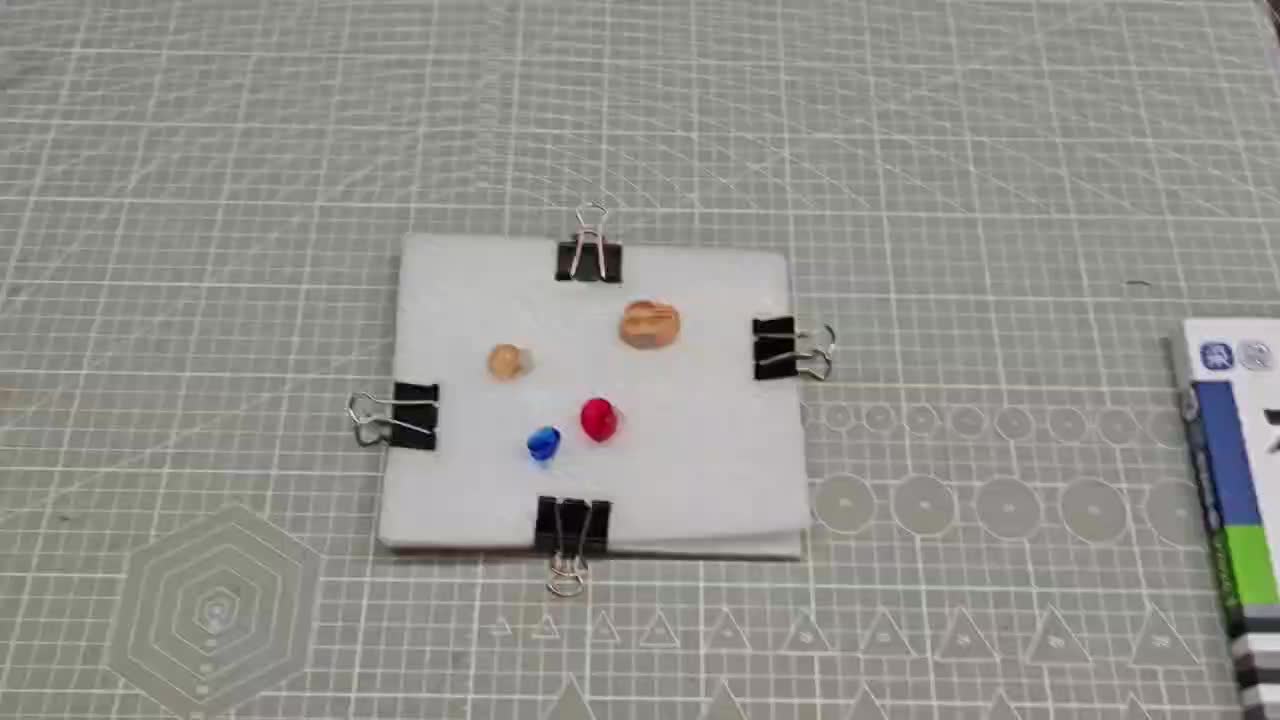
In foam-lined packaging scenarios with inconsistent manual loading, the challenge is not just gripping the part—it is dealing with unpredictability in position, depth, and orientation.By introducing a soft gripper with adaptive compliance, the system can reliably extract hearing aid and earphone components without requiring precise upstream control, enabling a more robust and scalable automation process.