Mouse Gripping in Electronics Manufacturing: How Can a Soft Gripper Handle Different Mouse Designs?
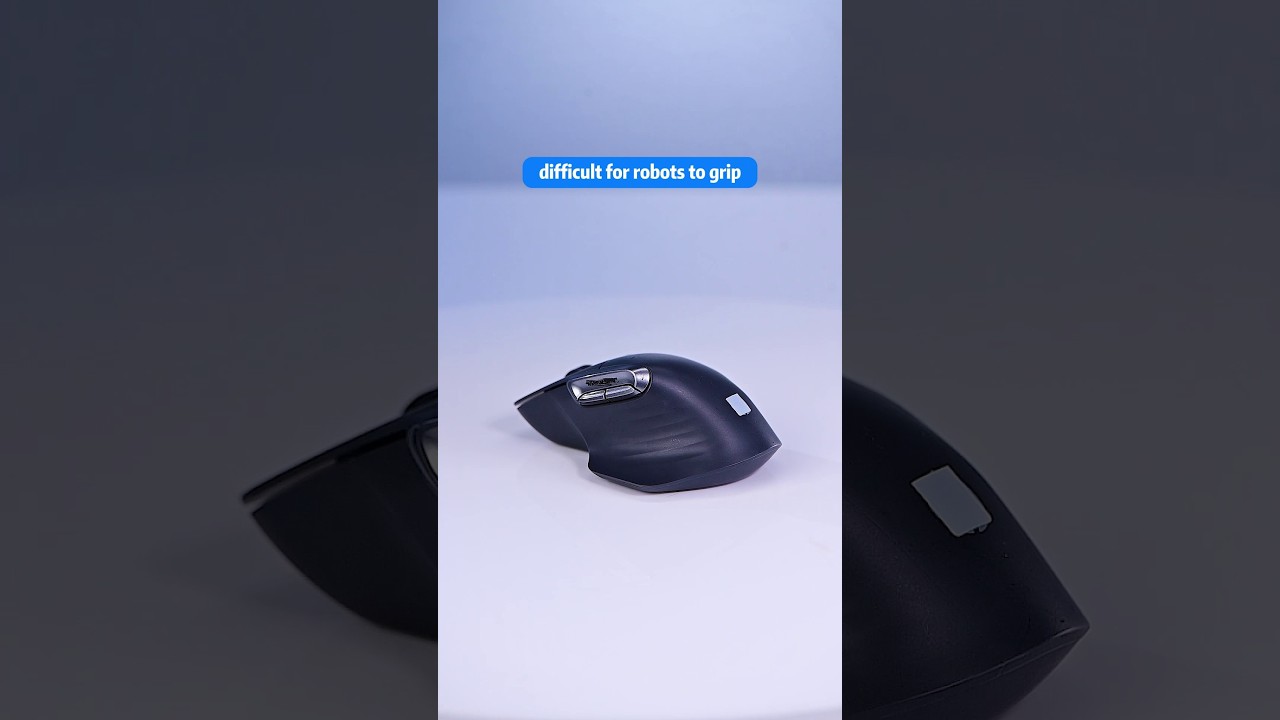
Mouse shells may look like easy parts to handle in an automated production line. But in practice, gripping them can be more challenging than expected.Most mouse housings have thin walls and carefully finished surfaces. Some have a matte or brushed finish, so even small scratches or pressure marks can affect their appearance.In one of our mouse gripping applications, we came across several common challenges. Here's what we found.
1. Why Is Mouse Gripping Challenging?
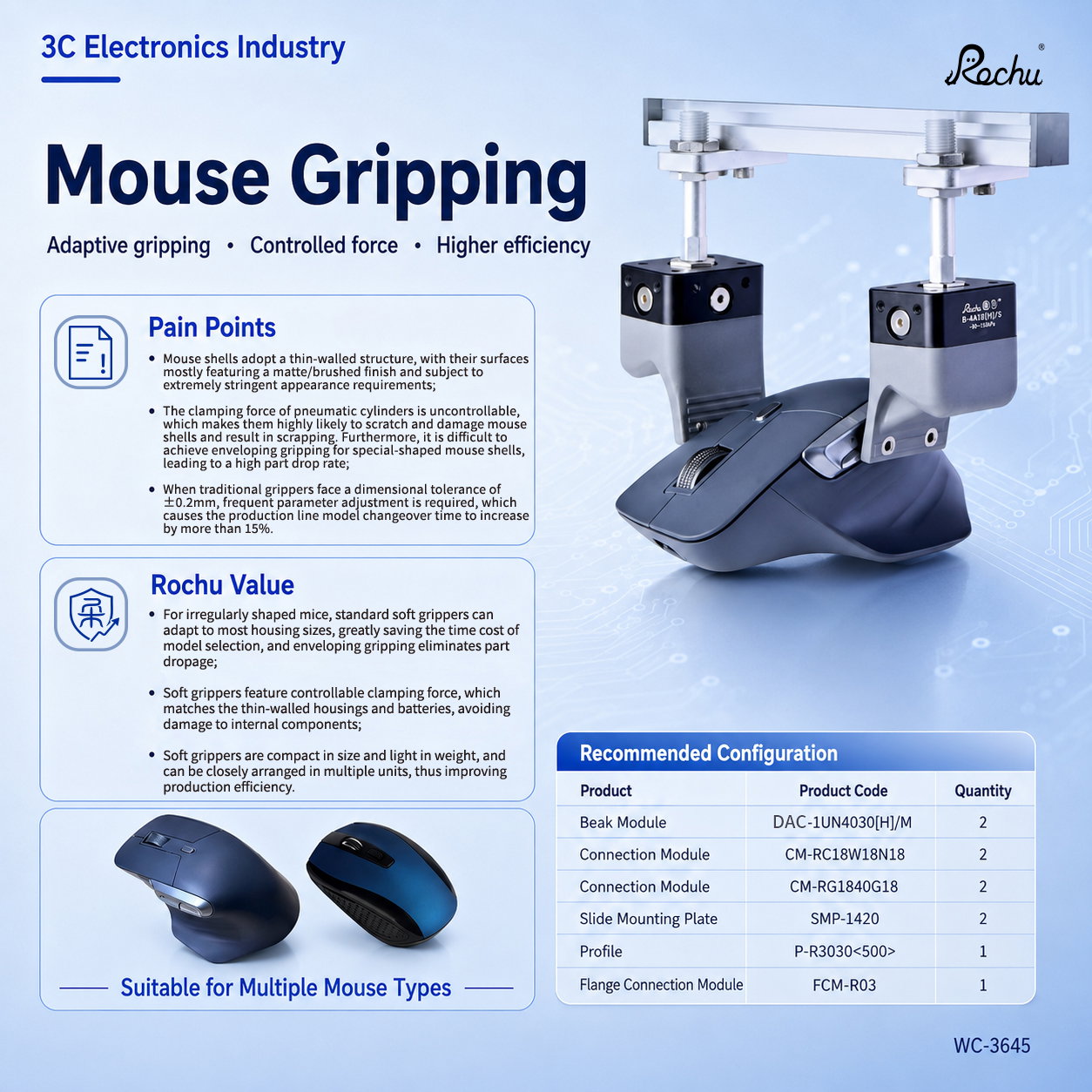
There are three main things to consider.First, mouse shells have thin walls.The housing can be easily affected by excessive clamping force. Traditional pneumatic grippers may not provide precise enough force control, which increases the risk of deformation or damage to internal components.Second, surface protection matters.Many mouse shells have matte or brushed finishes. Hard gripper fingers may leave scratches or pressure marks during handling, especially when the clamping force is too high.Third, mouse designs are not all the same.Different mouse models come with different sizes, shapes, and curved surfaces. With traditional grippers, a change in product dimensions may require parameter adjustments or even a gripper change. This can increase production line changeover time.
2. How Does a Soft Gripper Help?
For this application, we used a soft gripper to handle the mouse shells.Unlike rigid grippers, a soft robotic gripper can deform to follow the shape of the workpiece. This allows the fingers to make better contact with different mouse housings.Here are a few things worth looking at.Adaptive grippingThe flexible fingers can adapt to different mouse shapes and sizes. This helps reduce the need for frequent gripper changes when handling different models.Controlled gripping forceThe gripping force can be adjusted according to the workpiece. This is important for thin-walled housings, where excessive force may cause deformation or damage.Enveloping grippingThe soft fingers conform to the shape of the mouse and create contact around the workpiece. This helps provide a more stable grip and reduces the chance of dropping parts.
3. Handling Different Types of Mice
As shown in this application, the gripping setup is not limited to just one mouse design.Different mouse models have different widths, curves, and housing shapes. The flexible structure of the soft gripper allows it to adapt to these variations.For production lines that handle multiple mouse models, this can also reduce the time spent selecting and adjusting grippers.
4. A Compact Setup for Automated Production
Gripping performance is only part of the job. Equipment layout also matters.Soft grippers have a compact structure and can be arranged in multiple units according to production requirements.For automated equipment with limited space, this provides more flexibility when designing the workstation and helps improve production efficiency.
Mouse gripping may seem like a simple task, but thin walls, surface finishes, and differences between product models can make it more complicated.In 3C electronics manufacturing, a soft gripper needs to do more than just pick up a part. It also needs to consider gripping force, contact area, and adaptability to different workpieces.This is one example of how soft robotic grippers can be used in precision electronics handling.