Plasma Bag Handling in Narrow Gaps: Soft Gripper + soft wing Solution
In blood centers, plasma fractionation plants and hospital transfusion departments, plasma bags are typically stored at 2–8°C or even below −20°C, densely packed on racks and shelves. The bags are soft and deformable, surfaces are wet or frosted, and only an extremely narrow gap remains between adjacent bags. Conventional rigid grippers and standard vacuum cups struggle to pick and place them reliably without damage.For this scenario, a modular end-effector combining a soft gripper and a soft wing offers a practical path to automation that is compliant, clean and fully traceable
Why Is Grasping Plasma Bags in Narrow Gaps So Difficult?
| Conventional Approach | Key Problems |
| Rigid pneumatic gripper | Concentrated grip force can crush bags; poor adaptability to changing bag shapes. |
| Standard vacuum cup | Weak seal on wrinkled or frosted surfaces; suction may deform the bag and cover labels. |
| Manual handling | Labor-intensive in cold environments, low throughput, risk of cross-contamination and occupational exposure. |
Clearly, a new kind of end-effector is needed — one that can reach into narrow gaps yet touch the bag with gentle, compliant force
The Solution: Combining Soft Gripper with Soft Wings
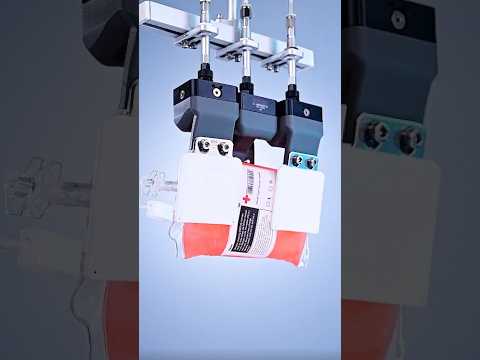
For this application, we use a combination of a soft robotic gripper and soft wings.Instead of forcing the plasma bag into a fixed gripping position, the end effector adapts its contact to the bag.The soft fingers provide compliant gripping, allowing the gripper to accommodate the changing shape of the bag. Meanwhile, the flexible wings increase the contact area and provide additional support during handling.Together, they create a more distributed and gentle gripping method
What Should Engineers Consider When Selecting a Plasma Bag Gripper?
Before selecting a gripper for automated plasma bag handling, several factors should be evaluated.
Bag Size and Weight
The dimensions and weight of the bag determine the required gripping and supporting capacity.
Filling Condition
A full bag and a partially filled bag can have very different geometries and stiffness.
Gripping Direction
The ideal gripping configuration depends on whether the bag needs to be picked from the side, top, bottom, or another orientation.
Required Handling Speed
For high-cycle automation, the gripper must provide a suitable balance between response speed and stable gripping.
Contact and Support
For flexible medical products, it is important to consider not only how to grip the bag, but also how to support it during movement.This is one reason why combining soft fingers with flexible supporting elements can be useful.
A More Adaptive Approach to Medical Automation
Plasma bag handling is a good example of why automation cannot always be solved by simply increasing gripping force.When the workpiece is rigid, a fixed mechanical geometry may be sufficient.When the workpiece is soft and deformable, the end effector needs to accommodate changes in shape and contact conditions.A soft robotic gripper with soft wings approaches the problem differently:Instead of forcing the bag to fit the gripper, the gripper adapts to the bag.This principle can be useful not only for plasma bag handling, but also for a wide range of medical, laboratory, packaging, and flexible-product automation applications.