Why Is Automating Instant Noodle Packaging More Challenging Than It Looks?
When people first see an automated instant noodle packaging line, they often think:"A noodle cake weighs less than 100 grams. A robot should be able to pick it up with ease."In reality, the opposite is true.
An Instant Noodle Cake Is More Fragile Than You Think
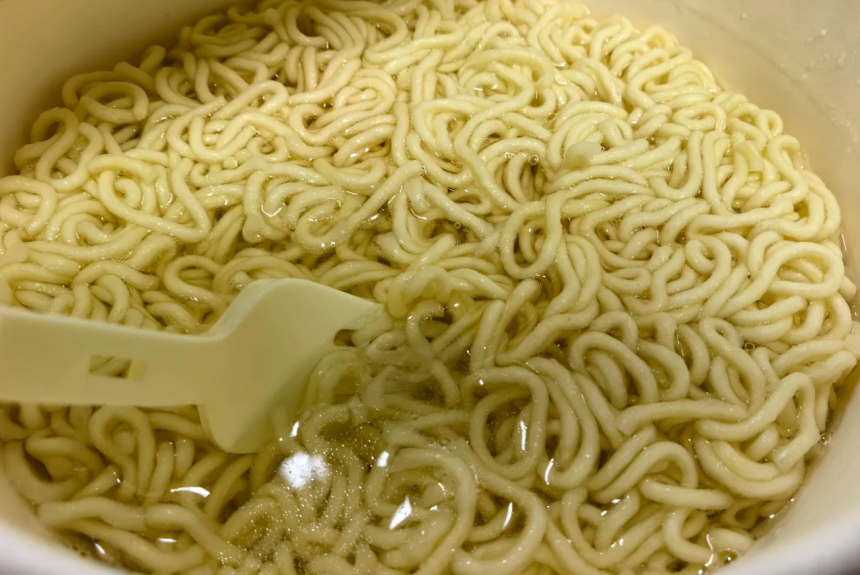
After frying, an instant noodle cake develops a porous, honeycomb-like structure with extremely brittle edges.Even slight variations in gripping force can lead to:
- Broken noodle cakes and excessive crumbs
- Debris contaminating the production line and increasing cleaning frequency
- Reduced product appearance and quality
- Higher drop rates during high-speed cartoning
Many manufacturers initially turn to vacuum suction cups.However, when handling already packaged instant noodles, a new challenge emerges.The laminated plastic film can deform under localized vacuum pressure, and in severe cases, the package seal may be compromised.Traditional rigid grippers avoid vacuum-related issues, but their small contact area concentrates pressure on specific points of the package. At high operating speeds, this often results in unstable gripping and product drops.So the real challenge isn't simply whether the robot can pick up the product—it's how to grip it securely while handling it gently.
Why More Food Manufacturers Are Choosing Soft Robotic Grippers
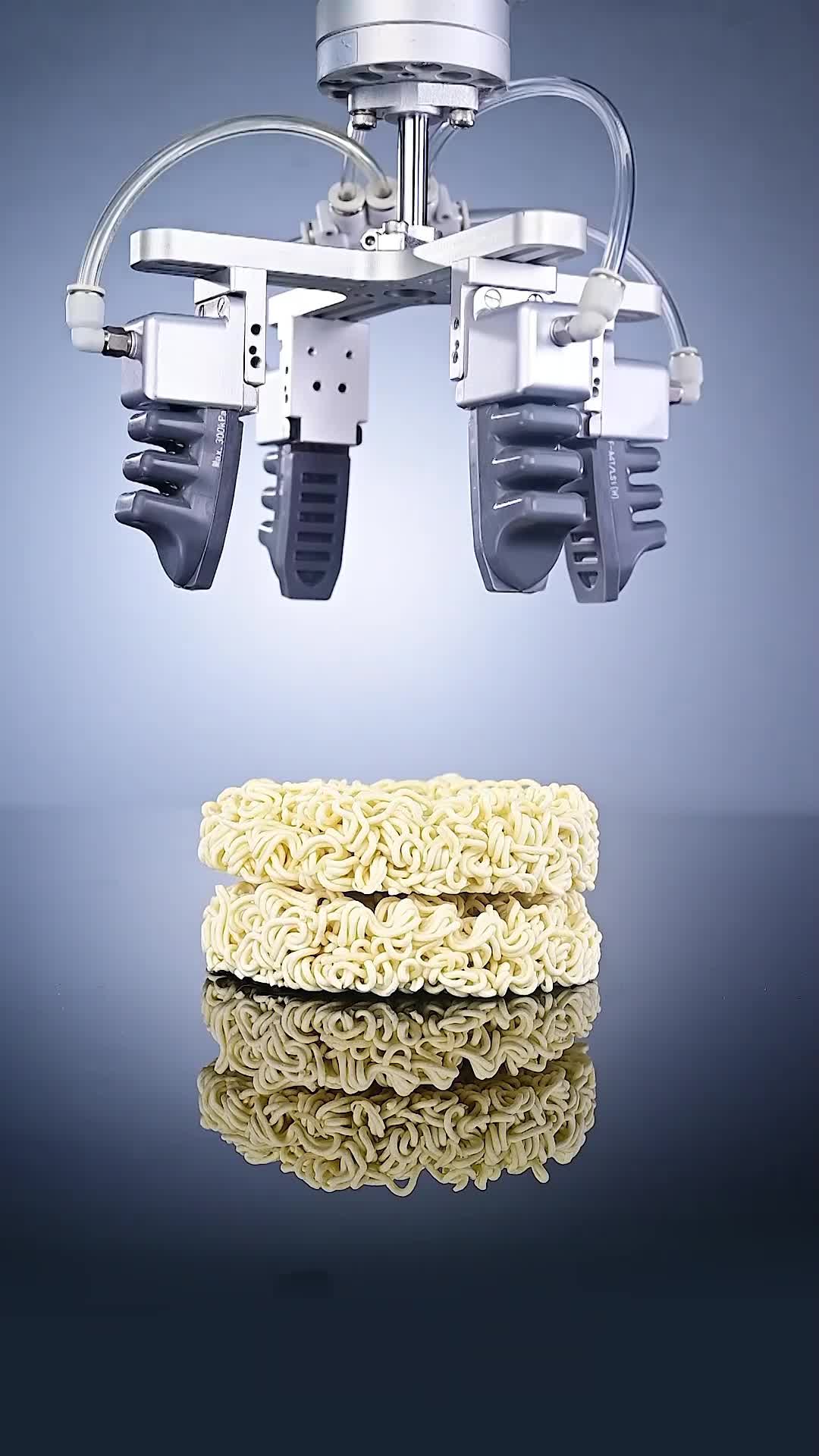
This is one of the key reasons why soft robotic grippers have become increasingly popular in food automation.Unlike conventional grippers that rely on a few contact points, soft robotic grippers use flexible silicone fingers to create a wrap-around surface contact with the product.This provides several advantages:✅ Larger contact area for more even pressure distribution✅ Reduced localized stress on the package✅ Automatic adaptation to product size variations and manufacturing tolerancesFor fragile products like instant noodles that are easily damaged both internally and externally, this gripping method delivers significantly greater stability.
Soft Materials Alone Aren't Enough—Precise Force Control Matters Even More
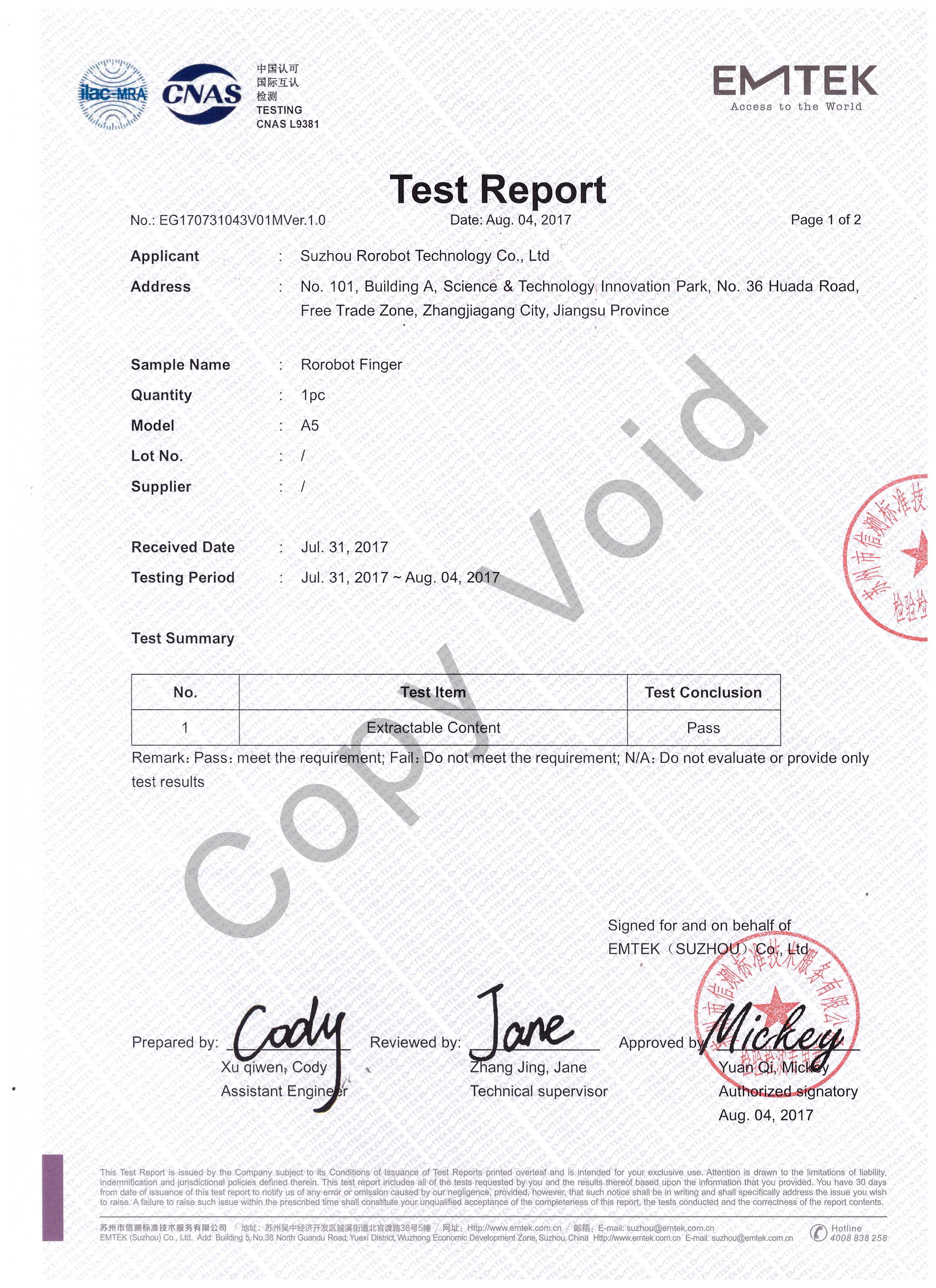
Many people assume that a soft gripper works simply because the material is soft.In reality, the combination of compliant materials and precise force control is what makes the difference.In our testing, the soft gripper uses food-grade silicone that can safely come into direct contact with food and complies with FDA and EC 1935/2004 food-contact regulations.More importantly, the gripper is paired with a precision controller capable of 0.1 N force control accuracy.This allows the gripper to detect product deformation almost instantly upon contact, applying just enough force to secure the package without continuing to compress it.The result is a more reliable grip while minimizing the risk of damaging either the noodle cake or its packaging.
Hygiene Is Another Critical Challenge
Gripping performance is only part of the equation.In food manufacturing, hygiene is just as important.During handling, instant noodles inevitably generate small crumbs.Traditional pneumatic grippers with open air channels can draw these particles into the system, increasing the risk of clogging and maintenance over time.To address this, our soft robotic gripper features a sealed pneumatic chamber that isolates the air path from the external environment. This design helps prevent crumbs from entering the system, simplifies cleaning, and better supports continuous food production.Combined with a high-speed Delta robot, the system achieves a stable throughput of 50–60 picks per minute. Together with a vision-guided positioning system, it enables fast, accurate, and damage-free cartoning.
In Food Automation, the End Effector Often Determines Success
When manufacturers upgrade their automation lines, they usually focus on robot brands, vision systems, or cycle times.However, in many real-world applications, we've found that the end effector is often the deciding factor in overall yield and system stability.A well-designed soft robotic gripper should do much more than simply pick up a product.It should:
- Prevent product breakage
- Protect the packaging from damage
- Minimize dropped products
- Reduce crumb generation
- Be easy to clean
- Deliver reliable long-term performance
For fragile foods like instant noodles, improving the gripping method can often have a greater impact on overall production efficiency than simply increasing robot speed.What is the biggest challenge in your food packaging line?Whether you're handling instant noodles, biscuits, baked goods, or other fragile packaged foods, we'd love to hear about your experience. Share your thoughts in the comments—we're always happy to discuss real-world automation challenges and solutions.