Gripping Small Precision Parts: When a Soft Gripper Needs a Finer Tip
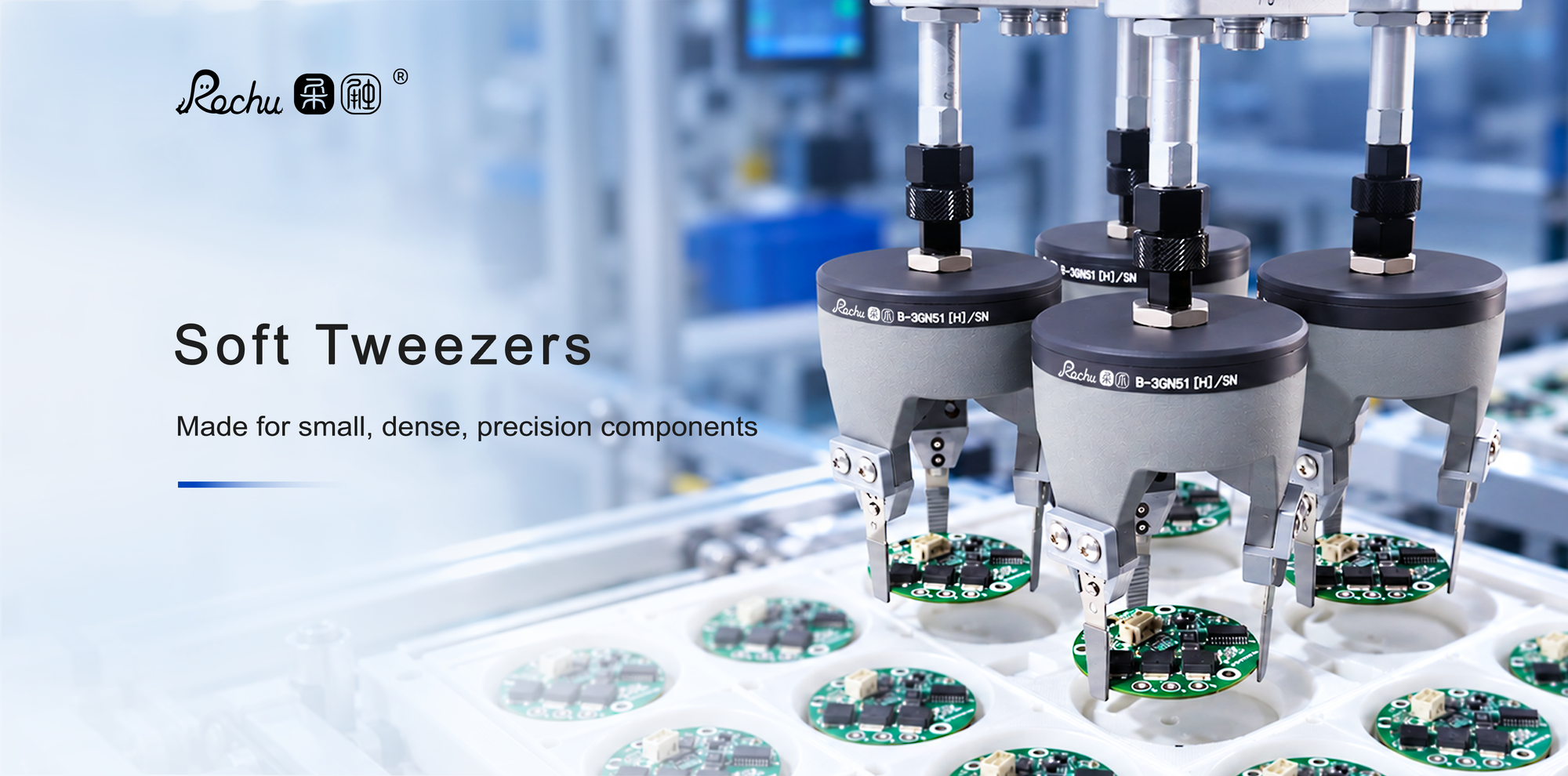
When it comes to automating the handling of small parts, the challenge is often not the robot.It’s the last few millimeters.Especially with small parts in high-density trays, picking them up by hand with tweezers can feel surprisingly easy. But once you try to automate the same task, things can suddenly get much more complicated.If you run into a similar situation, there’s no need to immediately replace the robot or redesign the entire gripping system.Sometimes, the problem can be traced back to a few details at the end of the robot.With conventional grippers, this can lead to three common problems:The fingers can’t get in. The part is difficult to grip. Or the part gets damaged.
Tight trays: sometimes the problem is simply getting in
When the gap between parts is very small, the size of the gripper fingers becomes critical.If the fingers are too thick, they may hit neighboring parts.If they are too wide, there may not be enough space to position them properly.In this situation, changing the robot path isn’t always the answer.Sometimes, the gripping end itself needs to be smaller.For Rochu Soft Grippers, Soft Tweezers can be added as an attachment to create a finer gripping tip.With a tip thickness of up to 2 mm, Soft Tweezers can be used for applications where conventional gripping tips have difficulty reaching small parts in tight spaces.
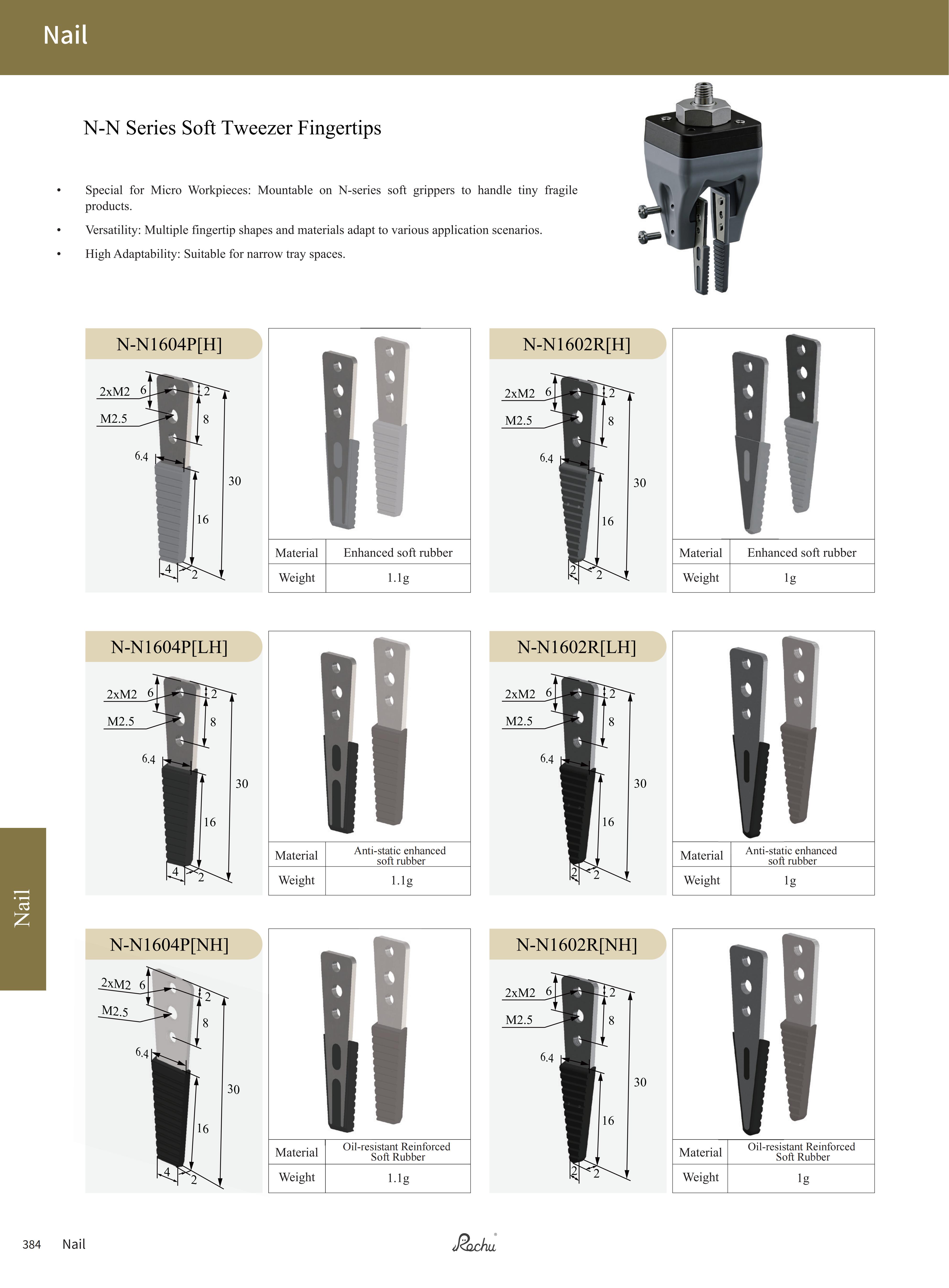
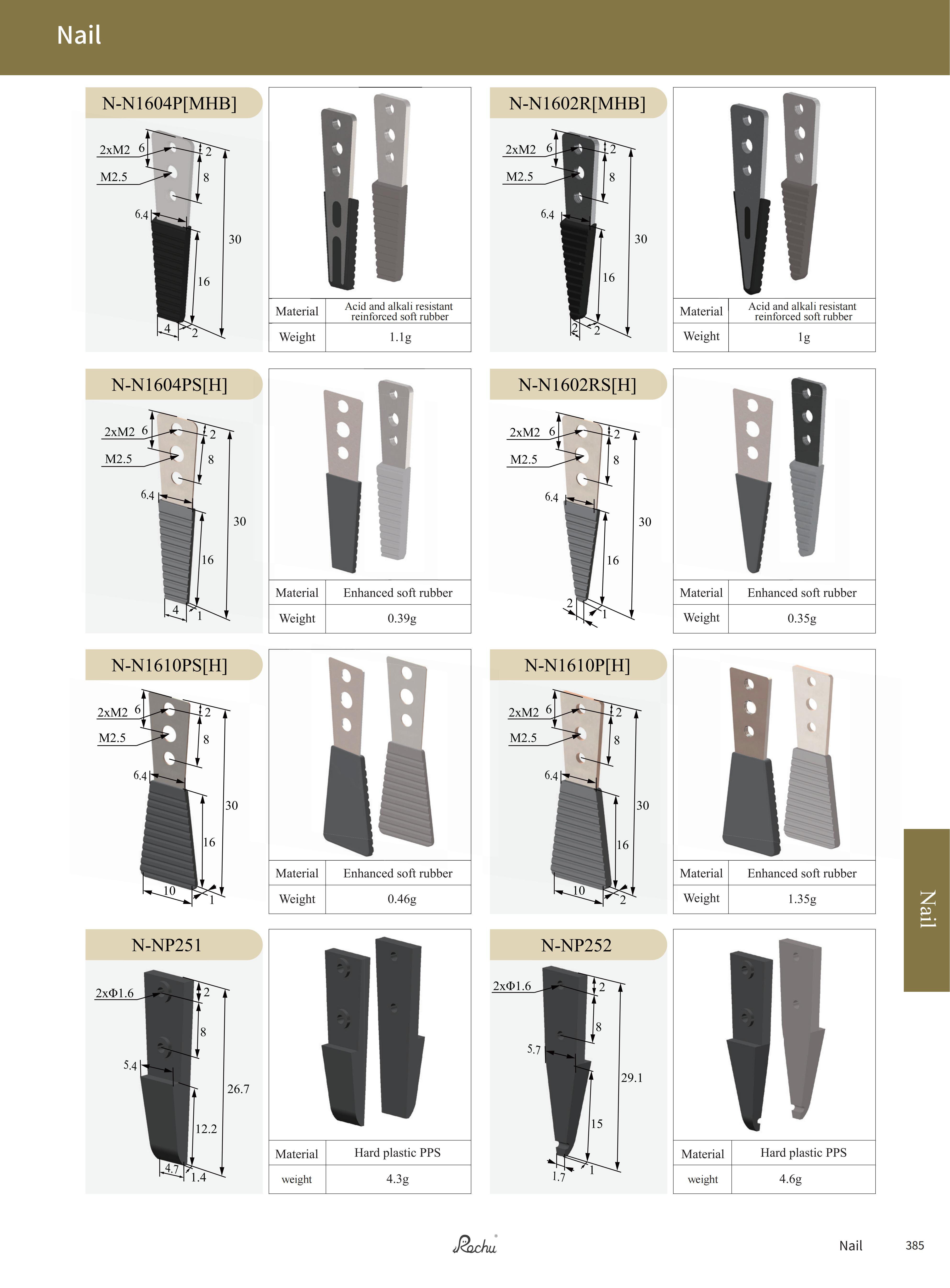
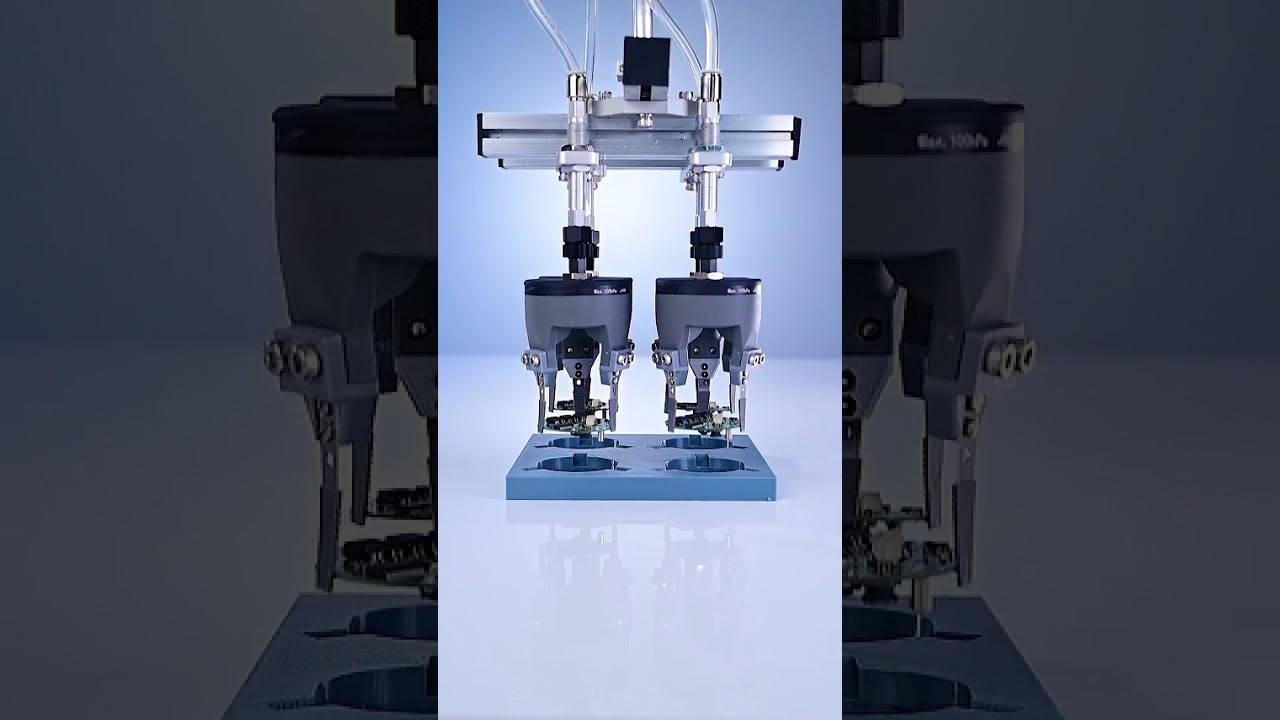
They are not a separate gripper. They are an attachment for the Soft Gripper.So if a Soft Gripper is already being used on a production line, Soft Tweezers can be considered when the parts become smaller or more densely arranged.
The smaller the part, the harder it is to find the right gripping point
Small parts also leave very little room for error.Grip too close to the edge, and the part may slip.Grip too deep, and the fingers may interfere with surrounding structures.Increase the gripping force, and you may get a stable pick—but at the cost of marks or deformation.The finer tips of Soft Tweezers make it possible to reach gripping points that can be difficult for conventional fingers to access.Combined with the compliant gripping of the Soft Gripper, this provides another option for handling small and delicate parts.Of course, “softer” does not simply mean “better.”The right setup still depends on the part’s weight, material, shape, and allowable gripping force.
When does Soft Gripper + Soft Tweezers make sense?
This combination is worth considering when you are dealing with:
- Small parts — conventional gripping tips are relatively large compared with the workpiece
- Dense trays — limited space between parts
- Tight picking areas — the gripping tip needs to reach into a narrow gap
- Delicate precision parts — rigid contact may leave marks or cause damage
- Different part sizes — the gripping end needs to be adapted to the application
Small electronic components, precision rings, small springs, and similar parts can all be evaluated based on their actual dimensions and gripping requirements.
Sometimes, the problem really is just a few millimeters
For many standard applications, a regular Soft Gripper may be enough.But as parts get smaller and trays get denser, those few millimeters between the gripper and the workpiece can become the limiting factor.The Soft Gripper provides the compliant gripping action.The Soft Tweezers make the gripping end finer, allowing it to reach into tighter picking areas.So when an application comes down to:the part is too small, the gap is too tight, and the standard gripping tip can’t get in,a Soft Gripper with Soft Tweezers is one configuration worth testing.
In small-part automation, the robot itself is often not the hardest part to solve.Sometimes, it comes down to the few millimeters between the gripper and the workpiece.Before changing the robot, tray, or entire fixture, it may be worth taking another look at the gripping end.A smaller tip can sometimes make a surprisingly big difference.