Why Traditional Grippers Are Struggling with Next-Generation PCBA Handling?
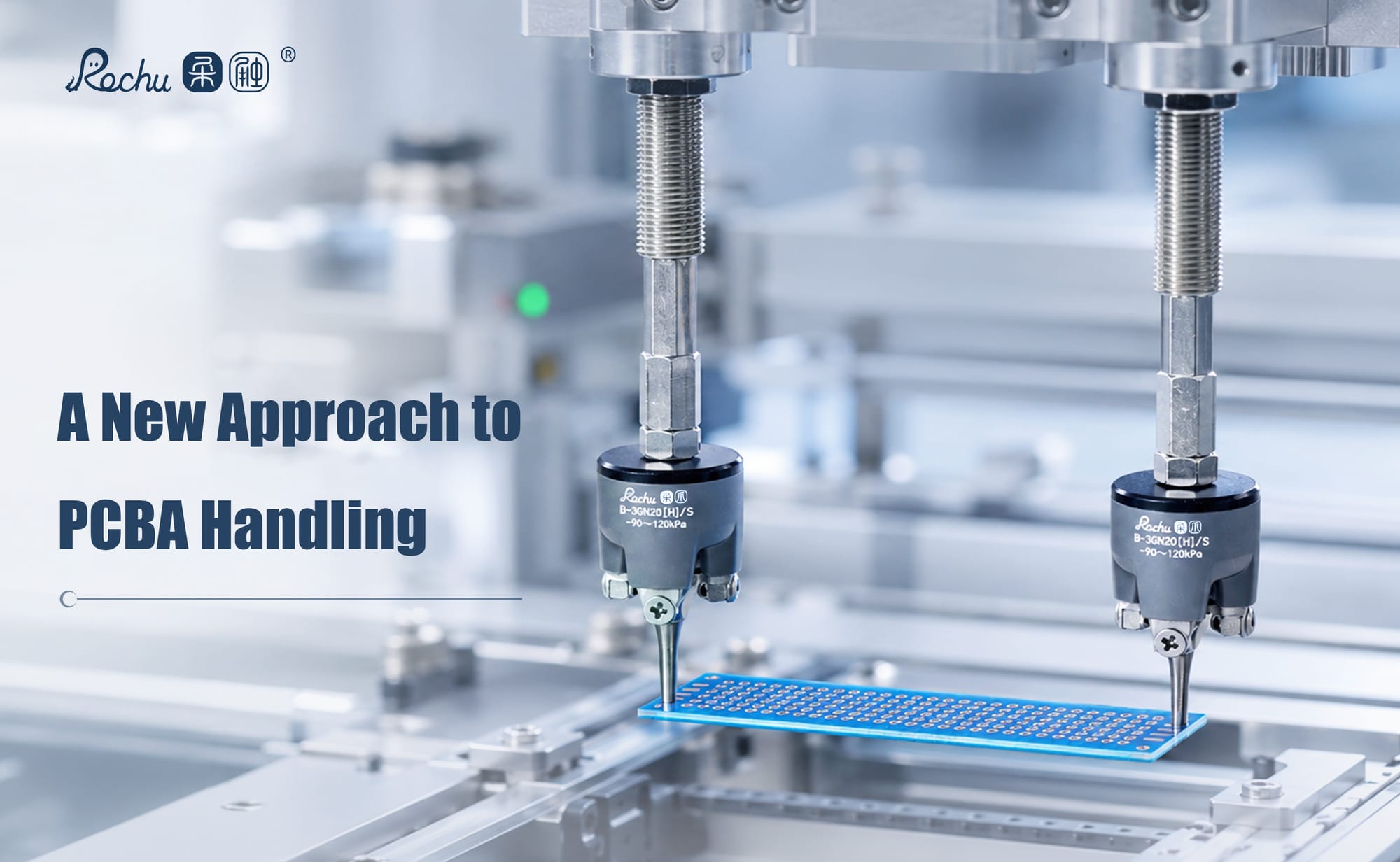
As the electronics industry continues to move toward higher integration, miniaturization, and greater product variety, PCBA (Printed Circuit Board Assembly) manufacturing is facing increasingly complex automation challenges.Today’s PCBAs are becoming smaller while component density continues to increase. Their surfaces are packed with sensitive components such as IC chips, ceramic capacitors, solder pads, and precision circuits.In automated production lines, handling is no longer just about speed. It requires a balance between:Damage preventionESD protectionFast product changeoverPrecise force control For high-density PCBA manufacturing, one key question is becoming increasingly important:How can manufacturers achieve safe, stable, and flexible automated handling within extremely limited spaces?
Soft Gripping: A New Approach to PCBA Handling
Soft robotic grippers are providing a new solution for precision electronics manufacturing.However, soft grippers are not simply about replacing a rigid tool with a softer material.The real transformation comes from three aspects:Gripping method, control strategy, and workflow adaptability.
1. Adaptive Force Control for Better Yield Protection
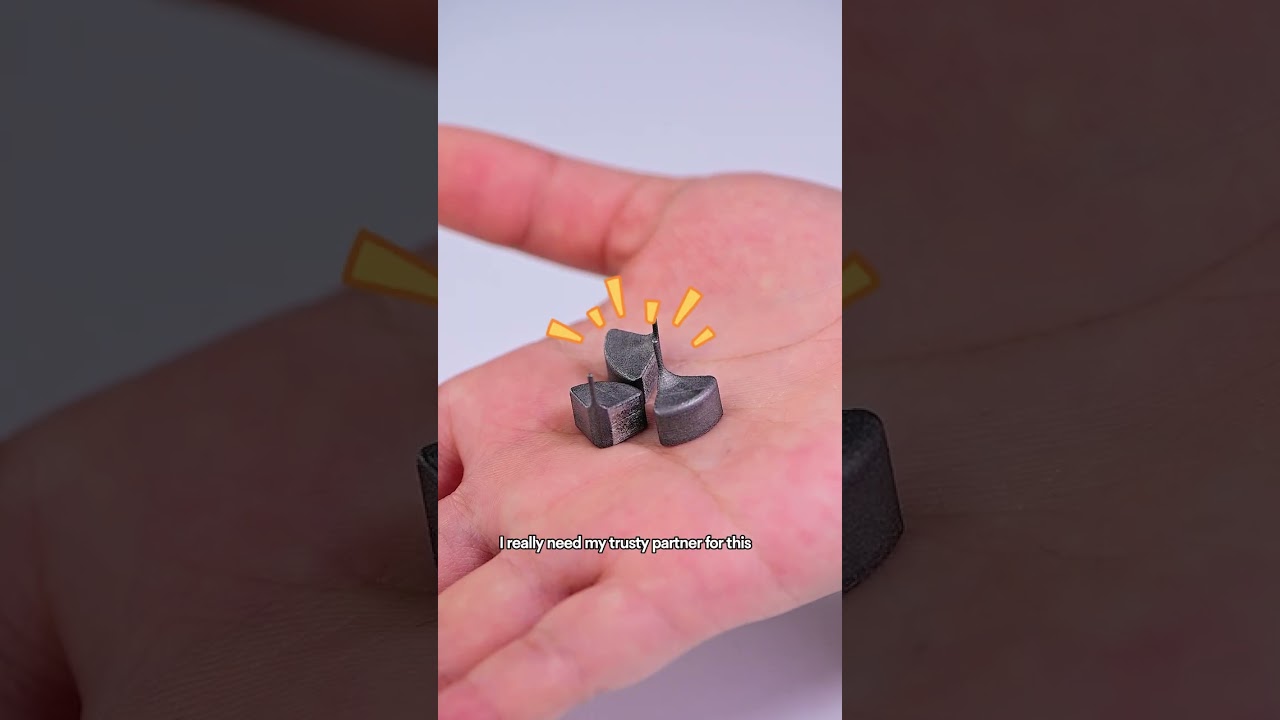
Unlike traditional rigid gripping methods, soft grippers integrate high-precision force control, enabling delicate sensing and accurate force adjustment.When the soft finger enters a structural hole, it does not push against the hole wall with rigid contact.Instead, the flexible material slightly deforms and naturally conforms to the hole profile.Even when different PCBA models have small manufacturing tolerances, the soft gripper can automatically compensate for these variations.This changes the contact method from:Point contact → Distributed surface contactBy reducing stress concentration and improving force distribution, soft gripping provides safer handling for fragile and high-density PCBAs.
2. Precision Micro-Hole Handling with Internal Expansion
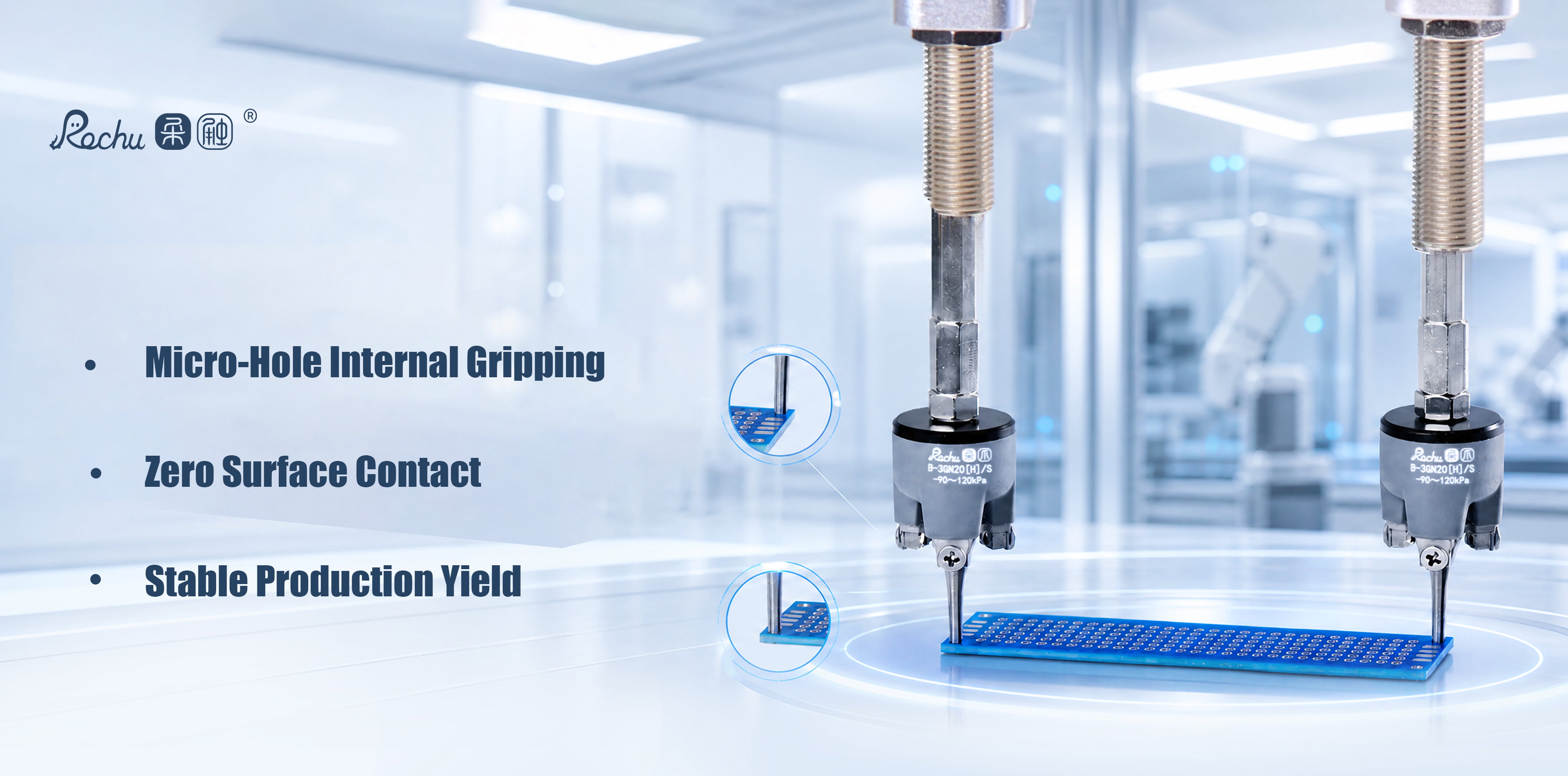
For highly integrated PCBAs, the surface area is often occupied by various electronic components, leaving very limited space for external gripping.To solve this challenge, soft grippers can use customized fingertip modules designed for extremely small spaces.For PCBAs with only 2.4 mm micro-structure holes, specially designed soft fingertips can accurately enter the holes and achieve internal expansion gripping.This approach:"Uses internal support instead of external gripping."It avoids contact with sensitive surface components and enables:Zero surface interference; Reduced damage risk; Reliable handling in compact layouts. Even in highly dense electronic assemblies, soft grippers can achieve stable pick-and-place operations through adaptability and positioning accuracy.
3. Modular Design for Faster Deployment
The flexibility of automation equipment determines how quickly a production line can respond to changing requirements.Soft grippers combine:Modular structures; Quick-change fingertip units; Flexible configuration options. For different PCBA designs, operators can simply replace the corresponding soft gripping module instead of redesigning the entire system.This lightweight and adaptable approach allows soft grippers to support both:Large-scale standardized production; Small-batch, multi-product manufacturing.
Soft Grippers Are Not Just Replacing Tools — They Are Changing Automation Thinking
Soft grippers are becoming a new choice for more automation applications.But the real challenge is not simply installing a new gripper.Moving from rigid grippers to soft grippers requires a new understanding of the entire automation workflow.Many companies underestimate the level of fine-tuning required during the transition.Successful implementation often involves adjustments in:Gripping strategies; Motion paths; Product positioning; Process coordination. A gripper is only one part of the automation system.True automation improvement is not just a technology upgrade.It is a mindset shift.
The Future of PCBA Handling: More Adaptive, More Intelligent
In PCBA production lines, handling connects multiple processes, including inspection, processing, assembly, and testing.As electronics manufacturing continues moving toward higher precision and greater flexibility, future gripping technologies will require:More accurate control.More adaptive handling.More intelligent sensing.Soft robotics is helping manufacturers move from automation that simply repeats tasks toward automation that can truly adapt.