How Do Soft Robotic Grippers Achieve Adaptive Grasping?
1. Why Is Adaptive Grasping Important in Industrial Automation?
In automated production, not every workpiece has the same shape, size, weight, or surface characteristics. Even within the same product category, small differences in dimensions, positioning, and material properties can affect how a robot handles an object.Traditional rigid grippers typically rely on predefined jaw positions and gripping paths. When the workpiece changes, the gripper may need to be adjusted, replaced, or reprogrammed. This can create additional setup time, particularly in production environments involving multiple product types or frequent changeovers.Soft robotic grippers offer another approach. Instead of relying entirely on fixed contact geometry, they use flexible structures that can deform when interacting with a workpiece. This allows the gripper to accommodate certain variations in shape and size during contact.But how does this adaptation actually happen?The answer lies in the interaction between material properties, structural design, actuation, and gripping control.
2. How Does Structural Flexibility Enable Adaptive Grasping?
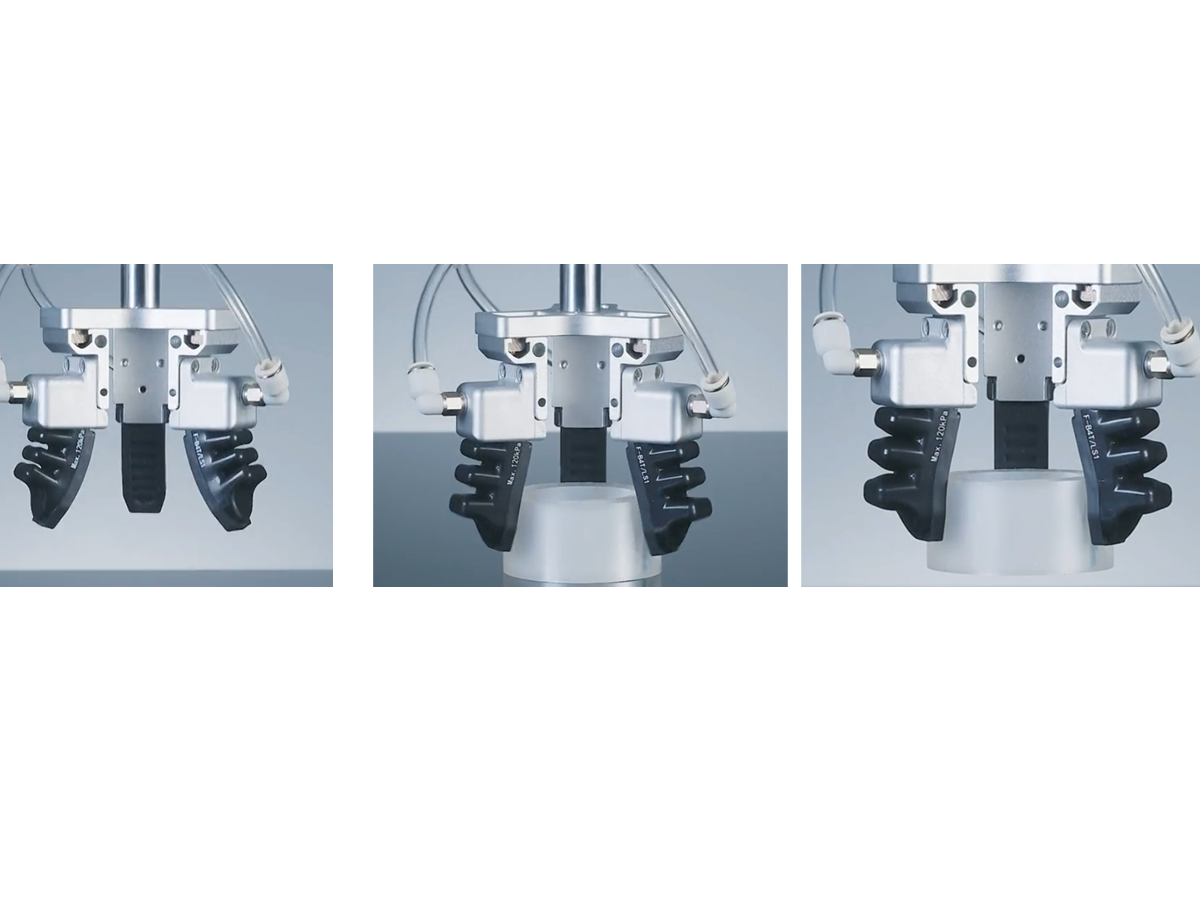
The most fundamental feature of a soft robotic gripper is its ability to deform under external forces.Unlike rigid jaws, which maintain relatively fixed contact surfaces, flexible gripping elements can bend, compress, or change their shape when they come into contact with an object.During gripping, the flexible structure gradually conforms to the workpiece's surface. Instead of concentrating contact at a few rigid points, it can establish contact across a larger area, depending on its design and the object's geometry.This provides two important benefits:
- Better shape accommodation: Flexible gripping elements can adapt to objects with different contours, including curved, irregular, and asymmetrical surfaces.
- More distributed contact: A larger or better-matched contact area can help distribute gripping pressure and reduce localized stress.
For example, when handling a curved plastic component, a rigid gripper may only contact the workpiece at a few specific points. A flexible gripping element can deform around the contour, creating a more suitable contact pattern.However, flexibility alone does not guarantee a secure grasp. The material, structural geometry, contact friction, gripping force, and workpiece weight must all be considered together.
3. How Do Different Actuation Mechanisms Control Gripping?
Structural flexibility determines how a gripper can deform, while its actuation mechanism determines how that deformation is produced.Common soft gripper designs use several different actuation approaches.
Pneumatic Actuation
Pneumatic soft grippers use compressed air to drive deformation in flexible structures.When air enters an internal chamber, pressure causes the structure to expand or bend in a controlled direction. Depending on the chamber geometry and material properties, the gripping element can curve around the workpiece.By adjusting the air pressure, the deformation and resulting gripping force can be influenced.Pneumatic actuation is widely studied because it offers a relatively simple way to generate flexible motion. However, its performance depends on chamber design, material stiffness, air pressure, and the characteristics of the object being handled.

Tendon-Driven Actuation
Tendon-driven grippers use cables or flexible transmission elements to produce bending motion.When a tendon is pulled, the gripping finger bends toward the workpiece. Multiple tendons or carefully designed mechanical structures can produce different bending patterns.This approach can provide useful control over finger movement, although cable routing, friction, and mechanical wear need to be considered.
Material-Based Actuation
Some soft grippers use smart materials that change shape or mechanical properties in response to external stimuli, such as heat, electricity, or magnetic fields.These approaches offer additional design possibilities, but their response speed, operating conditions, and integration requirements vary considerably.The choice of actuation method depends on the application. There is no single mechanism that is ideal for every workpiece or production environment.
4. How Does a Soft Gripper Maintain a Stable Grip Without Damaging the Workpiece?
Adaptive grasping is not simply about making a gripper flexible enough to wrap around an object. It must also maintain sufficient holding force without applying excessive pressure.This requires balancing three factors.
Contact Area
The contact area influences how gripping force is distributed across the workpiece.When a flexible finger conforms more closely to an object's surface, the contact area may increase. Under suitable conditions, this can reduce localized pressure and improve contact stability.This is particularly relevant when handling thin-walled plastic components, delicate electronic parts, or products with sensitive surface finishes.
Gripping Force
Insufficient force may allow a workpiece to slip during transfer. Excessive force, on the other hand, may deform the object or leave unwanted marks.The appropriate gripping force depends on the object's mass, geometry, surface friction, acceleration during movement, and the gripping direction.For this reason, soft gripper selection should consider not only whether a finger can contact the workpiece, but also whether it can hold the workpiece reliably throughout the entire handling process.
Friction and Surface Characteristics
Different materials have different friction characteristics.A smooth plastic component, an oily metal part, and a soft food product may require different contact designs and gripping conditions.The gripping material and surface geometry therefore play an important role in determining whether an adaptive grasp remains stable during movement.
5. What Role Do Sensors and Force Control Play in Adaptive Grasping?
Mechanical flexibility provides a form of passive adaptation: the gripper changes its shape in response to contact with the workpiece.However, some applications require more than passive deformation.For example, a robot may need to identify whether an object has been successfully grasped, detect slipping, or adjust gripping force according to changing conditions.This is where sensing and control become important.Depending on the system design, sensors can provide information about:
- Contact between the gripping element and the workpiece.
- Changes in gripping force.
- Finger deformation.
- Object position and possible slipping.
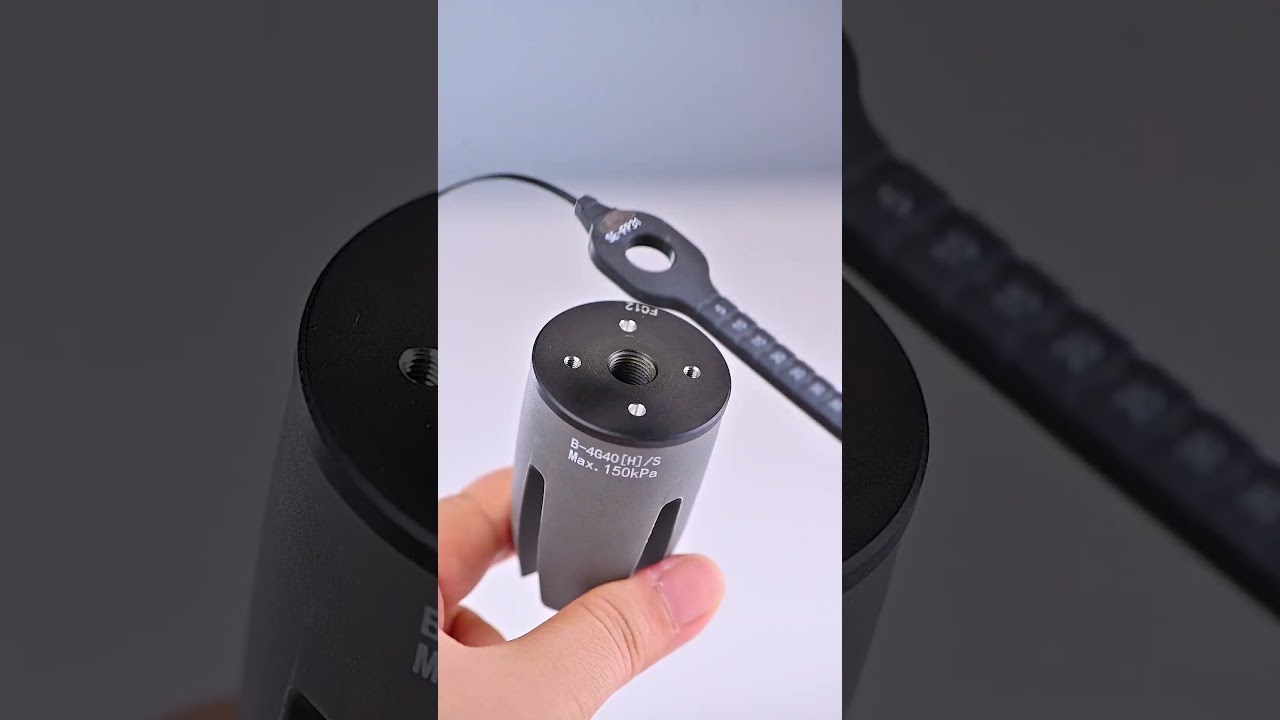
A control system can then use this information to adjust actuation pressure, gripping force, or robot movement.It is important to distinguish between mechanical adaptability and sensor-based feedback. A soft gripper does not automatically have force sensing or intelligent recognition simply because its structure is flexible.In practical automation, the two approaches can complement each other: flexible structures accommodate variations in physical shape, while sensing and control help manage variations in gripping conditions.
6. Where Is Adaptive Grasping Useful?
The ability to accommodate different workpiece geometries makes soft robotic grippers relevant to several manufacturing and handling applications.
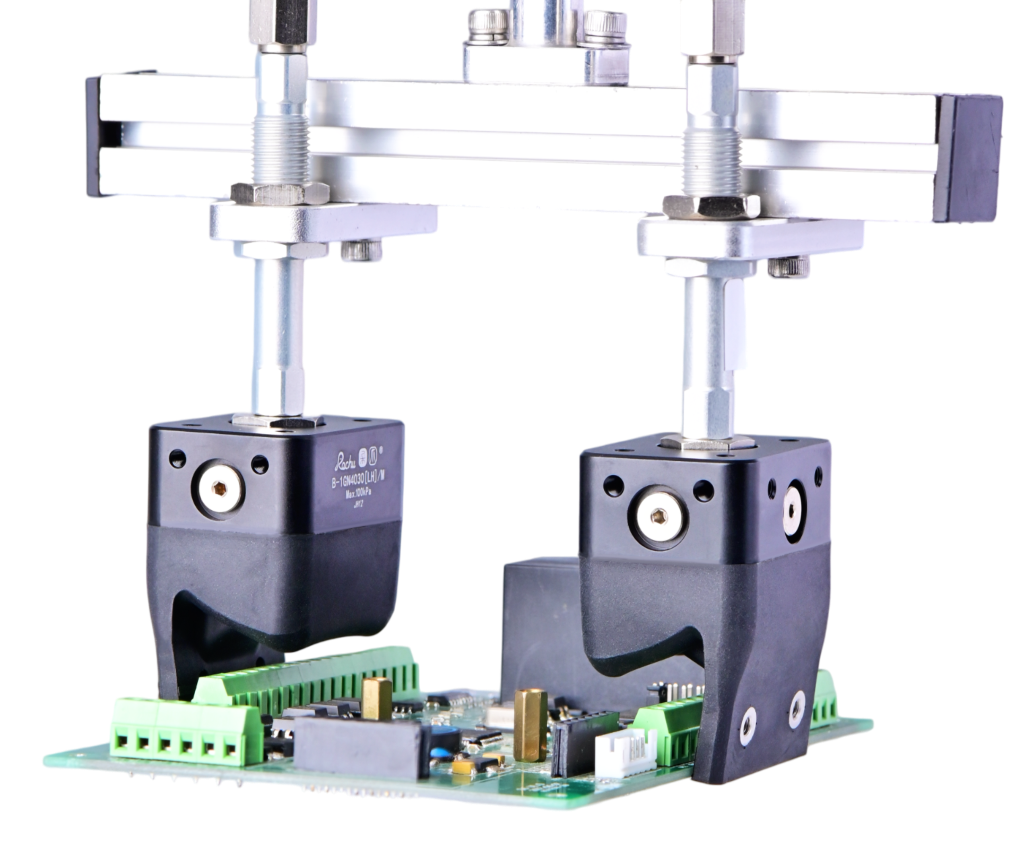
Electronics Manufacturing Small electronic components and assembled parts may have delicate surfaces, narrow gripping positions, or varying geometries. Flexible gripping elements can help establish suitable contact while reducing the risk of localized pressure.
Food Processing Food products vary considerably in shape, softness, and surface condition. Adaptive gripping can help accommodate these differences during picking, sorting, and packaging.
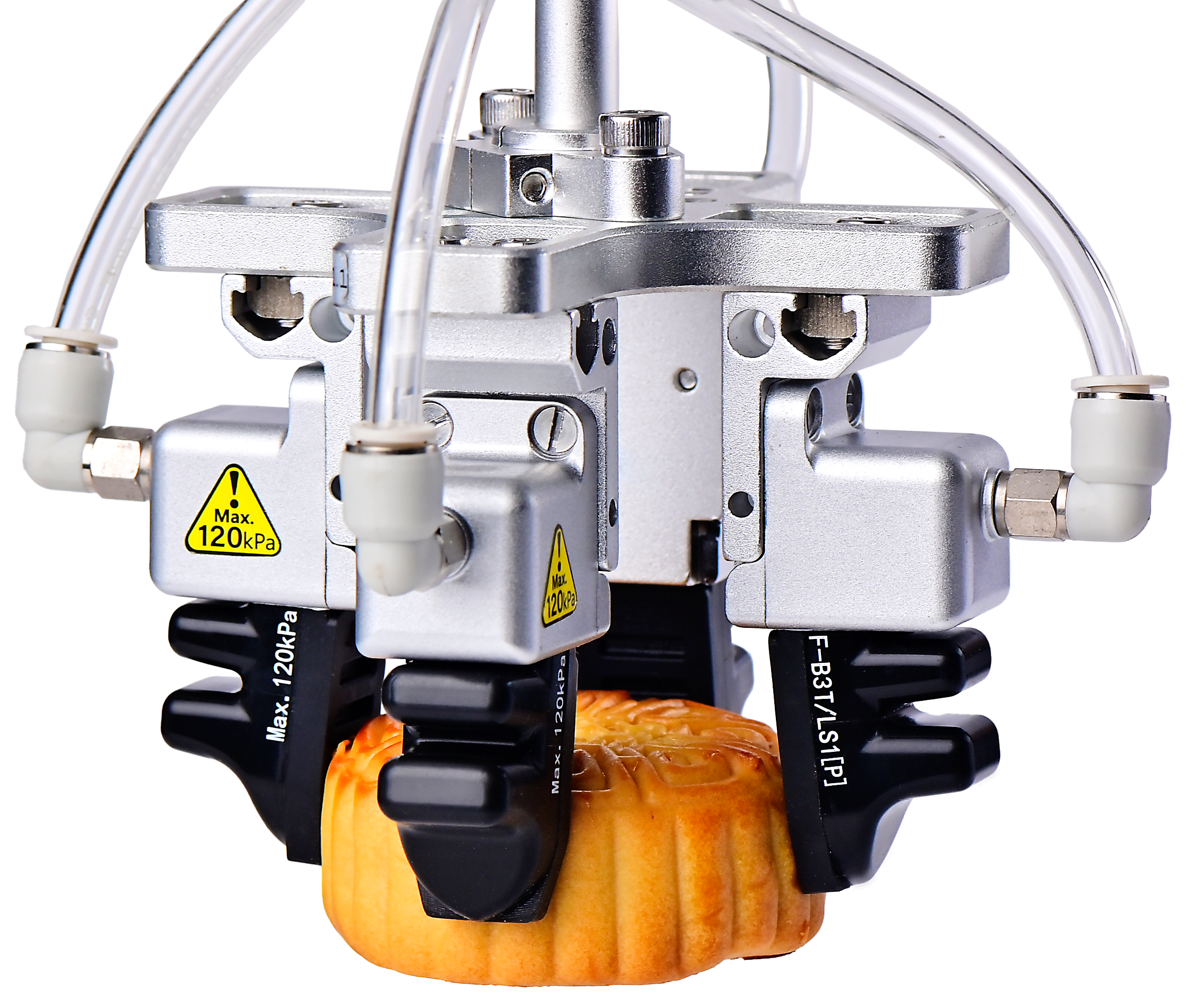
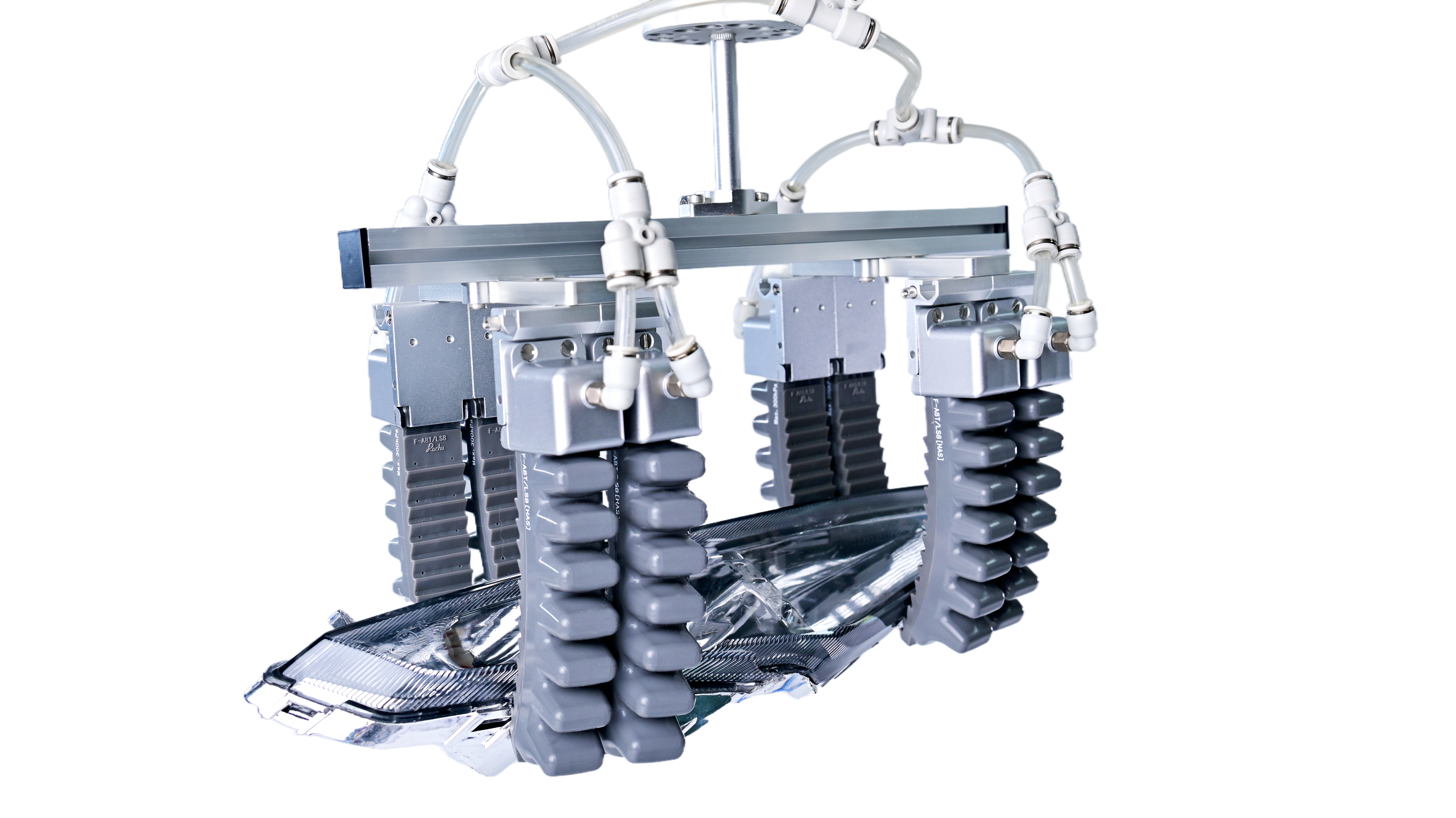
Automotive Manufacturing Plastic housings, injection-molded components, and other automotive parts often come in different geometries. A suitably designed soft gripper can accommodate shape variations and support flexible handling operations.
Medical and Laboratory Applications Containers, sample holders, and other delicate items may require controlled contact during handling. Gripper design must account for their dimensions, material properties, and handling requirements.In each application, the actual gripping method should be selected according to the workpiece and production conditions rather than assuming that one flexible gripper can handle every object.

7. How to Choose a Soft Gripper for Different Workpieces
Adaptive grasping does not mean that gripper selection is no longer necessary. A suitable gripping structure still needs to match the physical characteristics of the workpiece.Before selecting a soft robotic gripper, consider the following:
| Selection Factor | What to Consider |
|---|---|
| Workpiece geometry | Shape, dimensions, curvature, and gripping position |
| Workpiece weight | Required holding force and robot acceleration |
| Surface characteristics | Smoothness, friction, oil, moisture, and sensitivity |
| Material properties | Rigidity, elasticity, and deformation resistance |
| Production requirements | Cycle time, positioning accuracy, and product changeover |
| Gripping environment | Temperature, cleanliness, and food-contact requirements where applicable |
For workpieces with more complex geometries, combining different gripping elements may provide a more suitable contact arrangement than relying on a single finger design.The goal is not simply to make the gripper softer, but to achieve the right balance between flexibility, gripping stability, and application requirements.
Soft robotic grippers achieve adaptive grasping through the interaction of flexible materials, structural design, actuation, and, where required, sensing and control.Their ability to deform during contact allows them to accommodate certain differences in workpiece shape and geometry. This can reduce dependence on rigid, fixed contact configurations and make them useful in production environments involving delicate, irregular, or varied components.However, successful adaptive grasping still depends on choosing the right gripping structure, material, and operating conditions.As manufacturing continues to move toward greater product variety and more flexible production, soft robotic grippers offer another practical approach to handling workpieces that are difficult to manage with conventional rigid gripping methods.
Need help finding the right soft gripper?
Every workpiece has different gripping requirements. Tell us about your application, and the Rochu team can help you explore a suitable gripping solution.Rochu Soft Robotic gripper Website: https://www.softroboticgripper.com/Contact Rochu