How Soft Robotic Gripper Enable Stable Foam Gasket Handling in Industrial Automation
In industrial automation, foam gaskets are common components used in applications such as electronic device sealing, automotive component assembly, and precision equipment manufacturing. However, despite their simple appearance, foam gaskets can be challenging to handle automatically due to their soft texture, lightweight structure, compressibility, and porous surface.A manufacturing company faced similar challenges when trying to automate the loading and unloading process of foam gaskets.
The goal was to replace manual handling with a robotic solution to improve production efficiency. During initial testing, traditional robot grippers such as vacuum suction cups and rigid mechanical grippers struggled to achieve stable and reliable handling performance.Vacuum grippers are widely used for handling flat and rigid products, but they often have limitations when working with porous foam materials. Because air can pass through the foam structure, maintaining stable vacuum pressure can be difficult. During high-speed production, this may result in unstable gripping, product dropping, or repeated handling failures.
Rigid EOAT (End of Arm Tooling) solutions also face challenges when handling soft materials. Mechanical grippers rely on fixed clamping positions and gripping force. Excessive force may compress or deform the foam gasket, affecting the quality of subsequent assembly processes. On the other hand, insufficient gripping force may cause the product to shift or fall during transportation.
To overcome these challenges, the solution adopted a Soft Robotic Gripper as the robot end effector. Unlike traditional rigid grippers, soft robotic grippers use flexible structures and adaptive gripping technology to better handle irregular, delicate, and deformable products.During the gripping process, the soft gripper gently conforms to the shape of the foam gasket instead of applying concentrated mechanical force.
This flexible contact method helps distribute gripping pressure more evenly, reducing the risk of deformation while maintaining reliable handling performance.Another key advantage of soft robotic grippers for industrial automation is their ability to compensate for product variations. In real production environments, foam gaskets may have slight differences in thickness, position, or shape. Thanks to their adaptive structure, soft grippers can automatically adjust to these variations, reducing the requirement for extremely precise positioning.
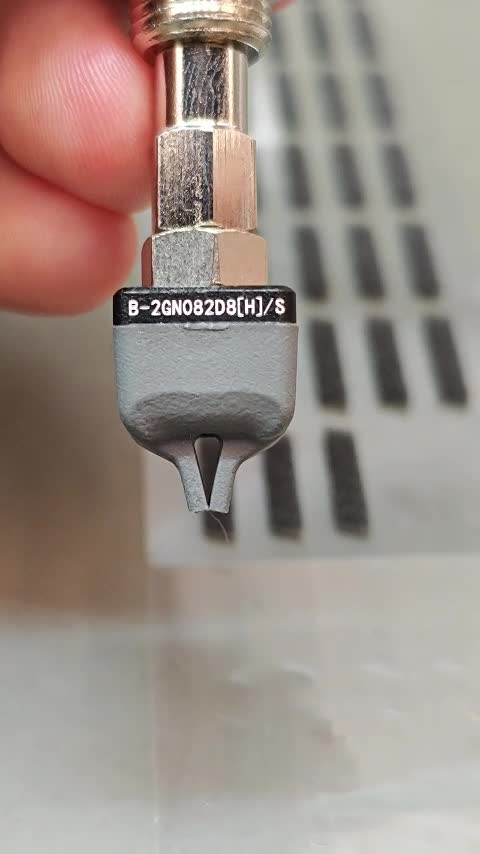
After integration with a robotic system, the robotic gripper can complete automatic picking, transferring, and placement of foam gaskets. This enables continuous operation on production lines while improving handling consistency and reducing manual intervention.Compared with traditional gripping methods, soft gripper technology provides a more flexible approach for handling lightweight and delicate components. It is particularly suitable for applications involving foam parts, sponge materials, sealing rings, thin films, flexible plastics, and other challenging products.
As industrial automation continues to evolve, robots are required to handle a wider variety of products beyond traditional rigid components. For these applications, soft robotics grippers offer an effective solution by combining flexibility, adaptability, and reliable gripping performance.By integrating robots, vision systems, and advanced robot end effectors, manufacturers can achieve more efficient and intelligent automation solutions for complex handling tasks.