Manipulación de baterías con carcasa de acero: un estudio de caso con una pinza robótica blanda
Lithium-ion batteries are widely used in consumer electronics, including smartphones, laptops, tablets, and wearable devices. As battery manufacturing becomes more precise and automated, choosing the right robotic gripper is increasingly important for reliable handling.When handling steel-shell batteries, manufacturers need to consider several factors, including resistance to corrosive environments, material compatibility, limited installation space, and gripping force control.In this application, the DAC-3A18[MHB]/S soft robotic gripper is used as an example to explore a gripping approach for steel-shell battery handling.
01. Key Challenges in Steel-Shell Battery Handling
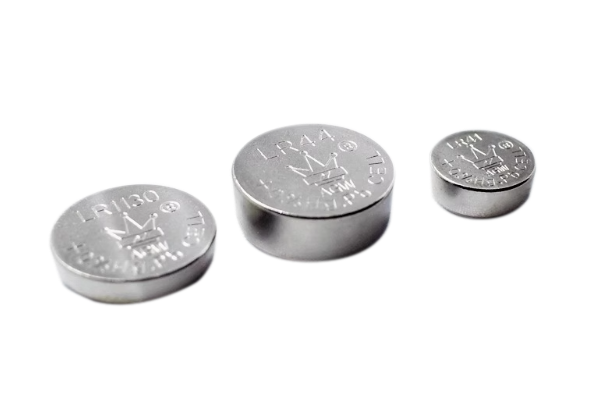
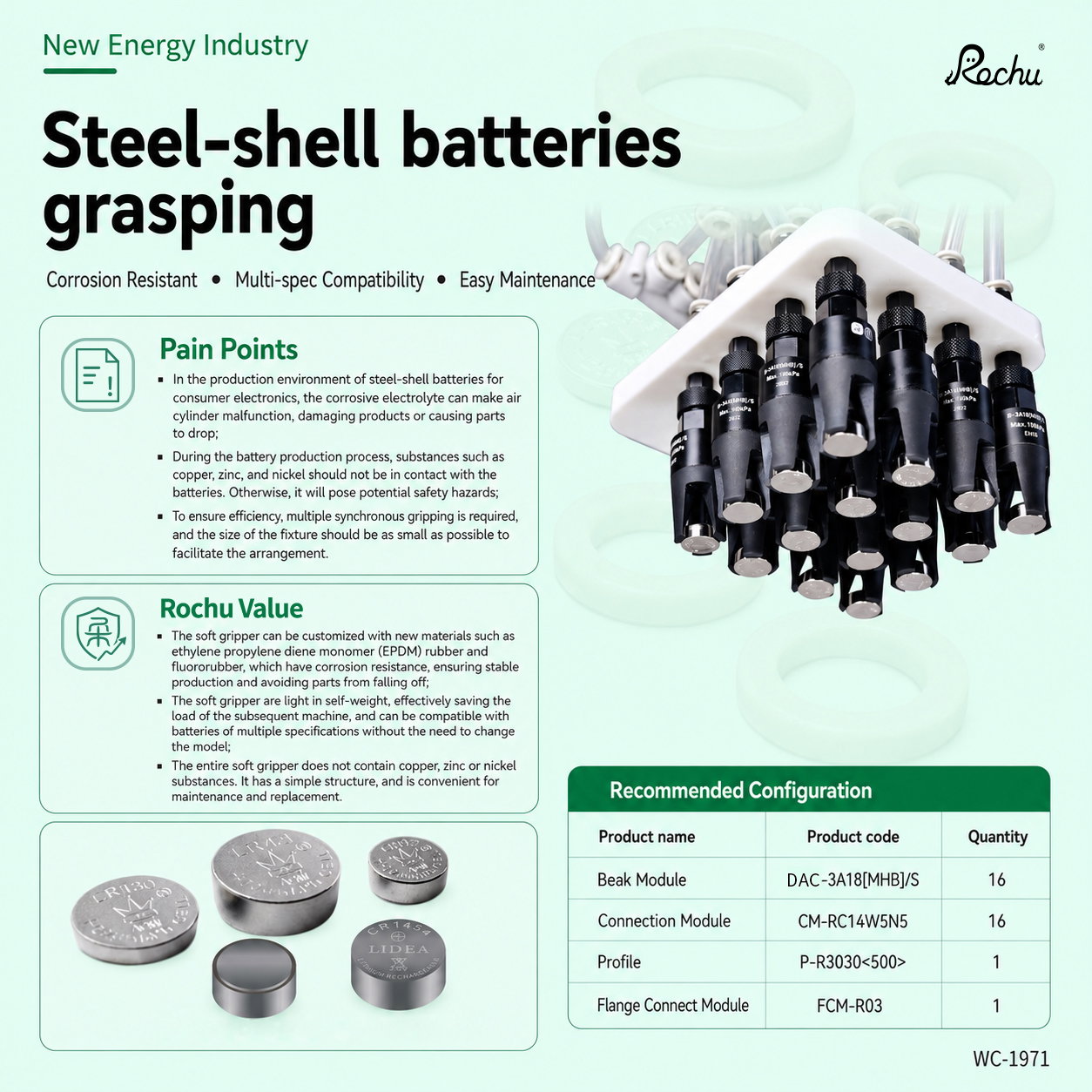
Corrosion resistanceIn production environments involving electrolytes, gripper materials need to be compatible with the chemicals they may encounter. Traditional metal grippers can be susceptible to corrosion or wear under certain conditions, potentially affecting gripping stability over time.Material compatibility and safetyBattery manufacturing requires careful material selection. Potential risks associated with contact materials, including copper, zinc, and nickel, should be evaluated against the specific process requirements and material control standards.Limited space and gripping flexibilitySmall steel-shell batteries often require compact end-of-arm tooling (EOAT) that can grip and release parts within a limited working space. When multiple battery sizes are handled on the same production line, the gripper's working range and force adjustment capabilities also become important.
02. Gripper Configuration: DAC-3A18[MHB]/S
This application uses the DAC-3A18[MHB]/S soft robotic gripper, featuring a customized material option and a lightweight design.Key specifications include:
- Customized material: The MHB material option is designed for applications requiring resistance to specific corrosive conditions.
- Lightweight design: Each gripper weighs approximately 9.9 g, helping reduce the load on the robot's end effector.
- Gripping range: Suitable for workpieces within an approximate size range of 3–12 mm, subject to the actual gripping geometry.
- Pneumatic control: Positive pressure opens the gripper fingers, while vacuum activates gripping.
- Gripping force control: When used with a compatible Rochu controller, gripping force control precision can reach 0.1 N.
The final configuration should be validated against battery dimensions, surface conditions, process requirements, and the actual operating environment.
03. Practical Considerations for Multi-Size Battery Handling
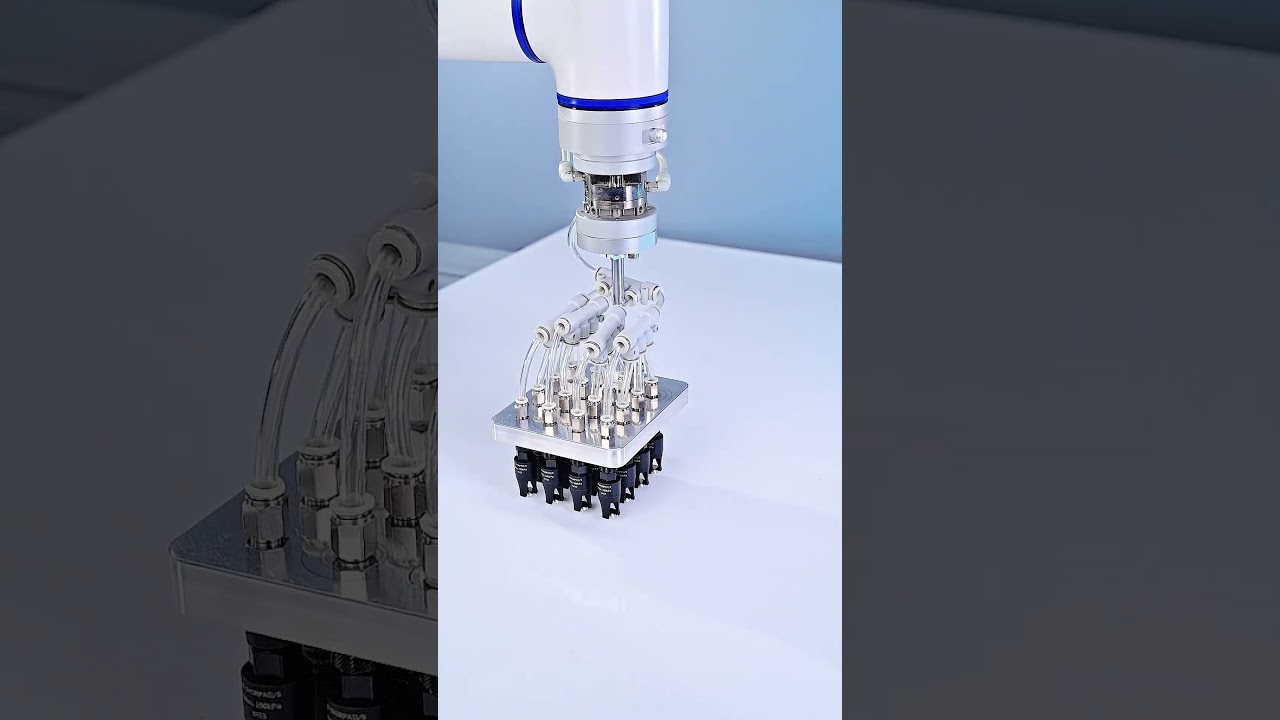
A lightweight robotic gripperWith a weight of approximately 9.9 g per gripper, the DAC-3A18[MHB]/S can help reduce end-effector weight, which is worth considering when designing compact battery handling systems.Adjustable gripping forceDifferent battery housings may have different mechanical properties and gripping requirements. Adjustable gripping force allows users to configure suitable parameters for the workpiece, helping reduce the risk of damage caused by excessive gripping force. Actual performance depends on the battery structure and application conditions.One gripper for a range of workpiece sizesWithin its applicable gripping range, the same gripper model can handle workpieces of different sizes between approximately 3 and 12 mm. This may reduce the need for frequent gripper changes when switching between compatible battery specifications.
Steel-shell battery handling involves more than simply picking and placing a workpiece. Gripper selection requires consideration of material compatibility, corrosion resistance, available installation space, and gripping force control.The DAC-3A18[MHB]/S soft robotic gripper provides one configuration to evaluate for these requirements. Before deployment, application testing should confirm gripping stability, material compatibility, and long-term performance under actual production conditions.When selecting a soft robotic gripper for battery manufacturing, start by identifying the battery dimensions, contact environment, allowable gripping force, and available installation space. These factors help determine the most suitable gripper and control configuration.
Our Black Friday deals are live! 👀 Take a look at what's on offer on our website