Решение для обработки автомобильных кольцевых деталей: мягкий роботизированный захват обеспечивает стабильное внутреннее удержание для автоматизированного производства.
In automotive manufacturing, ring-shaped components are widely used in various applications, including bearing rings, metal sleeves, sealing rings, and precision-machined circular parts.During production, these automotive components often need to go through multiple processes such as CNC machining, cleaning, inspection, and assembly. To improve efficiency and achieve intelligent manufacturing, robotic automation systems are increasingly being introduced for automatic loading, unloading, and part transfer.However, handling ring-shaped automotive parts is not always easy for traditional grippers. Most conventional grippers rely on external clamping, which requires contact with the outer surface of the workpiece. For precision metal rings, excessive clamping force may cause surface scratches, deformation, or damage. On the other hand, when parts are covered with machining oil or lubricants, the friction force between the gripper and the workpiece decreases, increasing the risk of slipping or dropping during high-speed movement.Another challenge is production flexibility. Different ring parts often have different diameters and dimensions, meaning traditional customized fixtures usually need to be replaced when changing products. This increases tooling costs and reduces the adaptability of automated production lines.To solve these challenges, a soft robotic gripper with internal gripping technology provides a more flexible solution for automotive ring parts handling. Instead of gripping from the outside
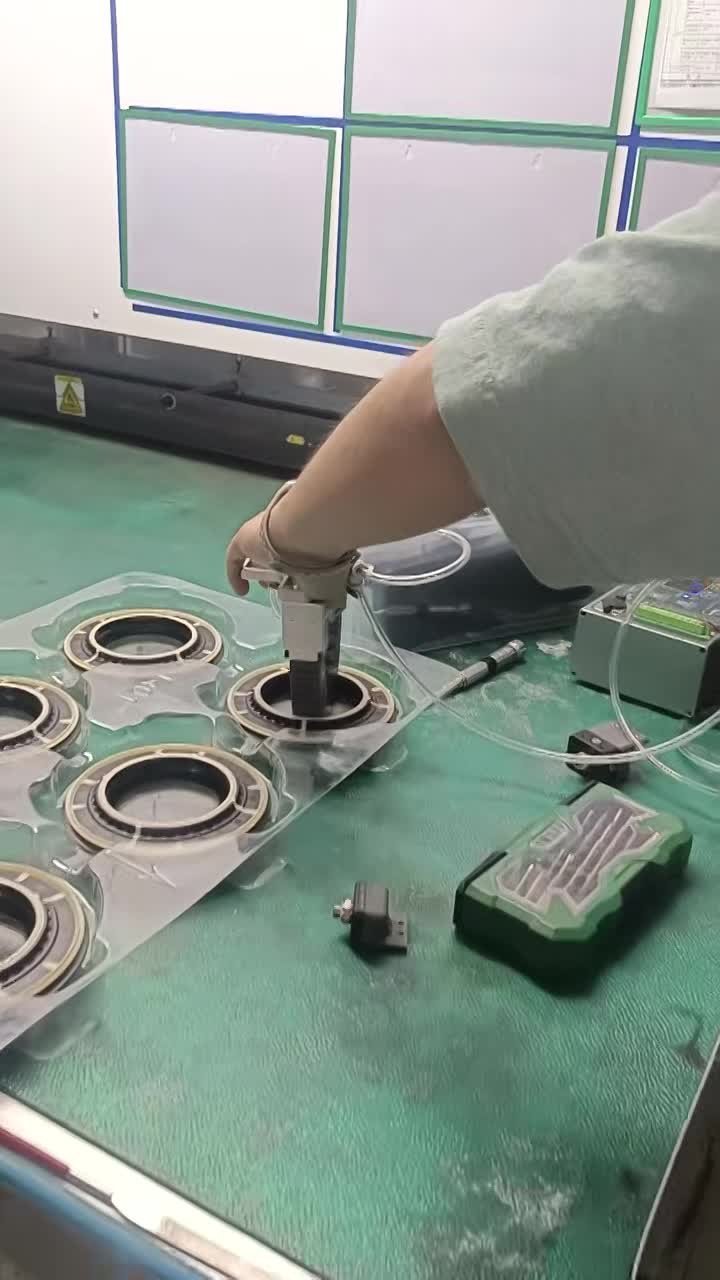
the soft gripper enters the inner hole of the ring-shaped component and expands outward to create stable contact with the inner surface, securely supporting and transferring the part.Compared with traditional external clamping methods, internal gripping with a soft robotic gripper reduces contact with the external surface of the component, minimizing the risk of scratches and damage. Thanks to the adaptive characteristics of soft materials, the gripper can conform to different inner diameters and shapes, achieving stable gripping while protecting precision components.In automotive manufacturing applications, soft robotic grippers can be integrated with industrial robots for CNC machine tending, automatic loading and unloading, inspection processes, and production line transfer. Even in challenging conditions such as oily metal surfaces, precision-machined components, and multi-product manufacturing environments, soft gripper technology provides reliable and flexible handling performance.For automotive parts manufacturers, soft robotic grippers are more than just an alternative to traditional fixtures. They represent a new approach to flexible automation, allowing robots to handle complex components more safely and efficiently while supporting the transition toward smarter and more adaptable manufacturing systems.