Why End-of-Arm Tool Weight Matters More Than You Think
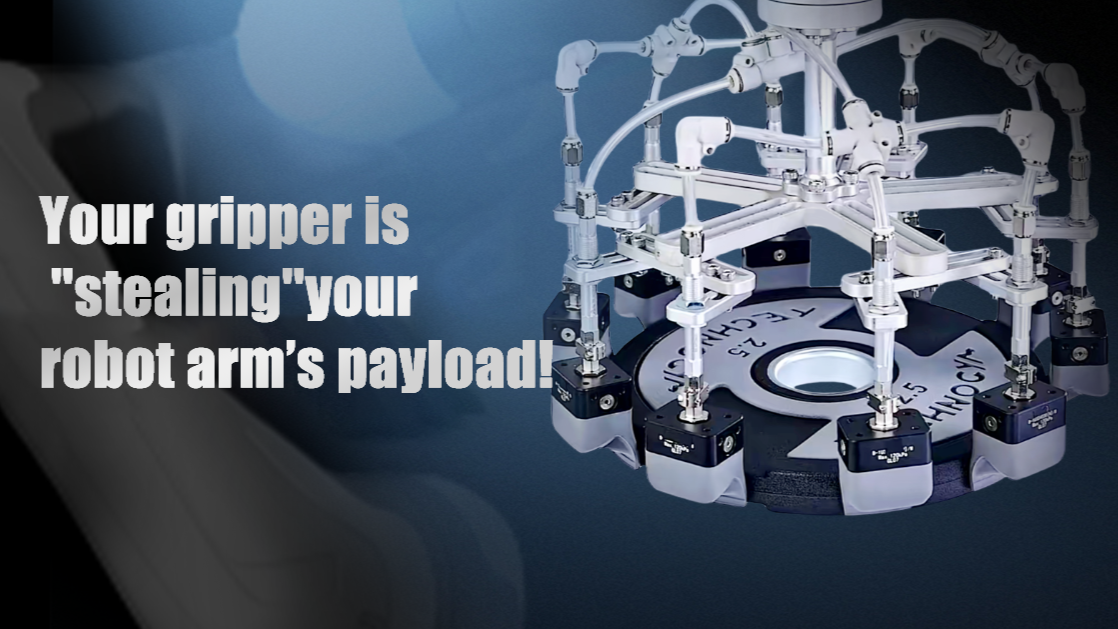
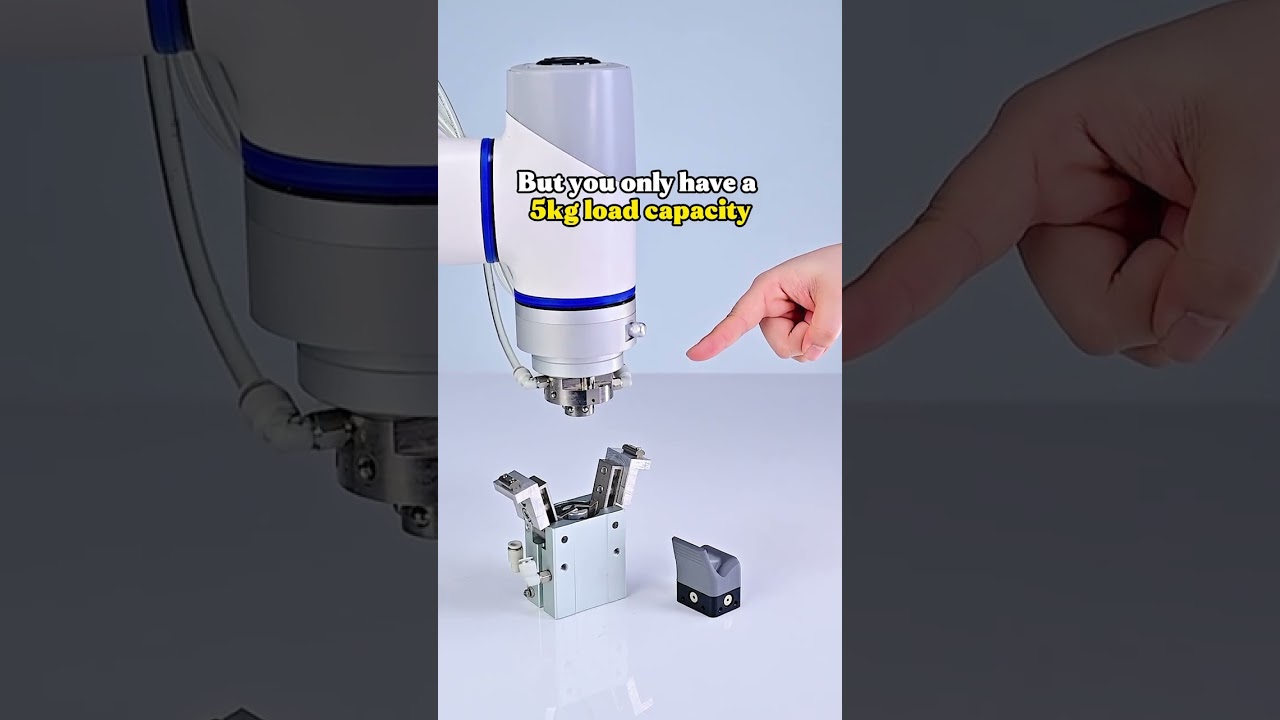
When you invest in an industrial robot with a rated payload of 20 kg, it’s easy to focus on the payload number and assume you can simply handle a 20 kg workpiece.But there’s an important detail that is often overlooked:The robot doesn’t just carry the workpiece. It also has to carry the gripper.And that means every kilogram added to the end-of-arm tooling directly reduces the payload available for the actual product.
The Payload Equation Is More Than Just the Workpiece
In a typical robotic handling application, the effective payload needs to account for the combined weight of:Gripper + Workpiece + Dynamic Loads ≤ Robot Rated PayloadFor example, if a robot is rated for 20 kg and the gripper weighs 5 kg, the theoretical remaining payload for the workpiece is only 15 kg.If the end-of-arm tooling weighs 8 kg, that leaves just 12 kg for the workpiece.And in real applications, things become even more complicated.
Weight Also Affects Dynamic Performance
Robot payload isn't only about whether the robot can physically lift the load.Acceleration, deceleration, cycle time, arm extension, and the distribution of mass at the wrist all affect the actual operating conditions.A heavier gripper can:
- Increase the load on robot joints and motors
- Reduce achievable acceleration and speed
- Increase vibration during high-speed movements
- Affect positioning accuracy and trajectory stability
- Increase mechanical stress during repeated cycles
- Potentially shorten the service life of critical components
This becomes particularly important in high-speed pick-and-place applications, long-reach robots, and applications requiring frequent acceleration and deceleration.In other words, a heavy gripper doesn't just consume payload—it can also consume performance.
This Is Where Lightweight End-of-Arm Tooling Matters
Reducing the weight of the end effector can give engineers more flexibility when selecting the robot itself.A lighter gripper can potentially allow:More payload available for the workpiece → lower robot payload requirements → better dynamic performance → potentially lower overall system cost.But weight isn't the only consideration.If a gripper can adapt to different workpiece shapes and sizes, it can also reduce the need for multiple dedicated tooling configurations across a production line.
Why Soft Grippers?
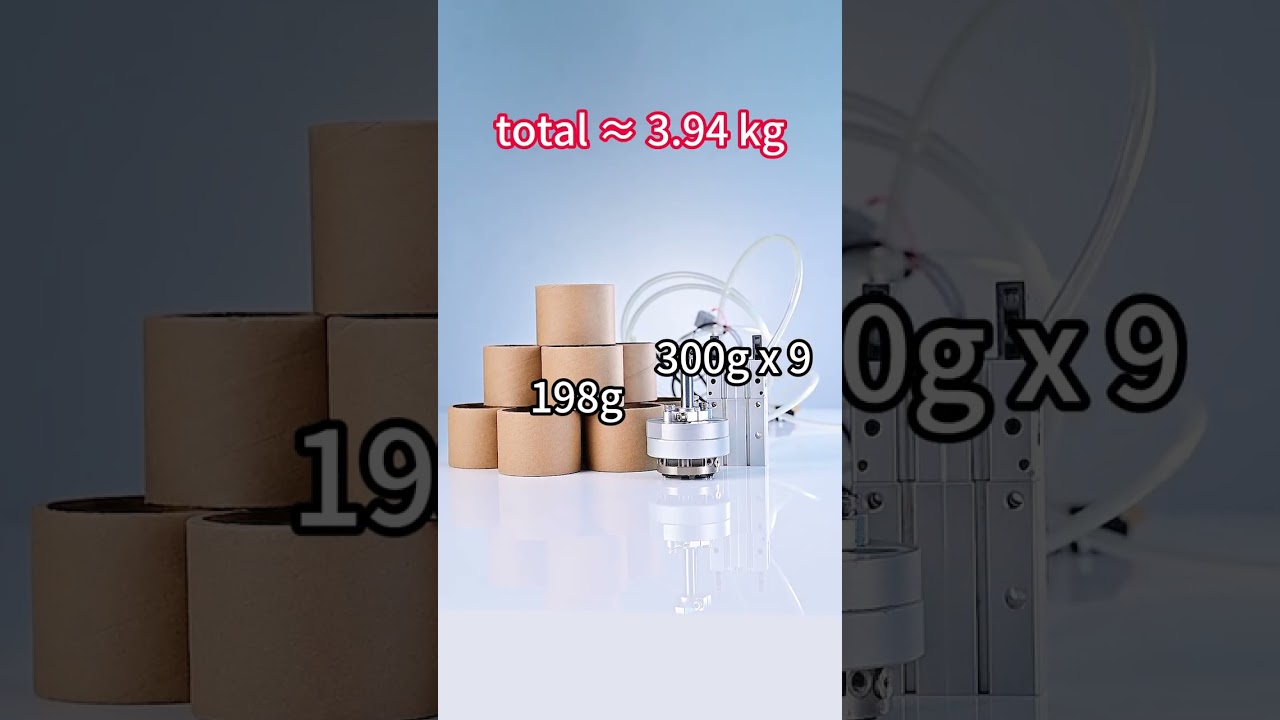
Rochu soft grippers use sealed pneumatic chambers to generate gripping motion, allowing the gripper structure to remain compact and lightweight.Compared with conventional pneumatic cylinder-based gripping solutions with similar functions, soft grippers can significantly reduce end-of-arm weight.At the same time, their compliant and adaptive gripping structure allows them to accommodate different shapes, dimensions, and delicate workpieces without relying entirely on rigid custom fixtures.This combination of lightweight design + adaptive gripping can be especially useful when robot payload and cycle time are critical considerations.
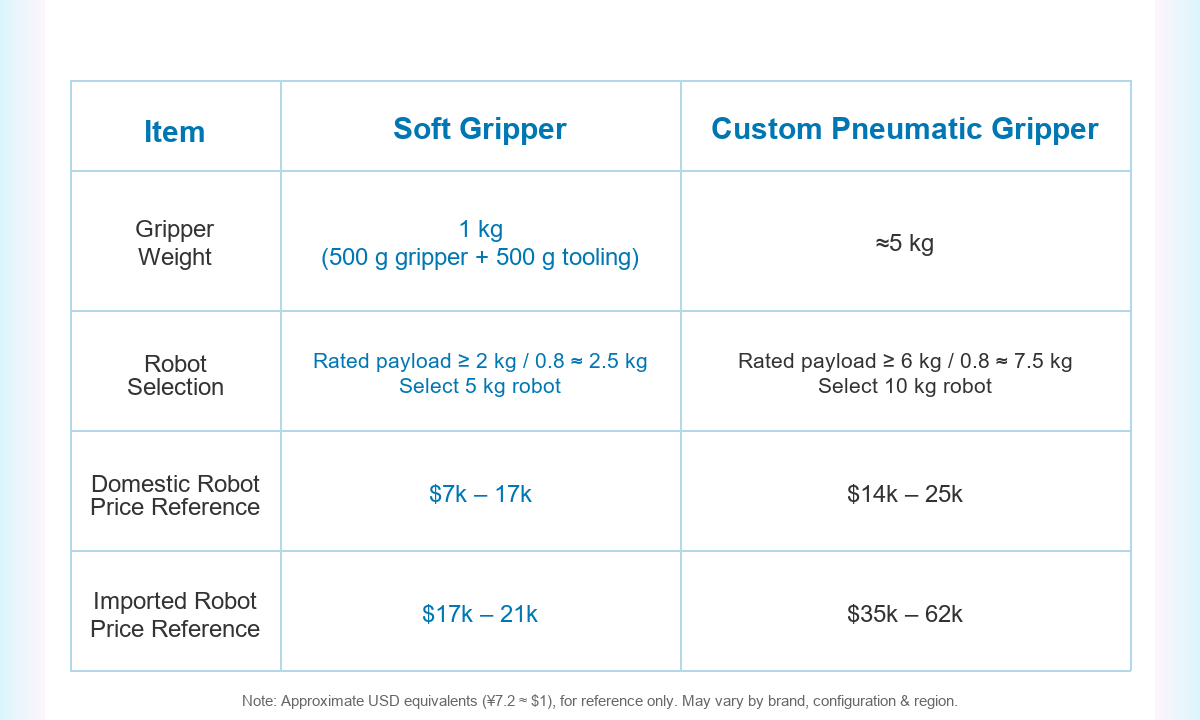
A Simple Comparison
we compare different gripping solutions under a 1 kg workpiece handling condition.The difference isn't simply about whether the robot can lift the product.It is about how much of the robot's available payload is actually being used by the tooling—and what that means for the rest of the system.
When selecting a robot gripper, don't just ask:
“Can it hold the product?”
Also ask:
“How much of my robot's payload is the gripper itself consuming?”
That question can make a surprisingly big difference to the entire automation system.Rochu develops soft robotic grippers and end-of-arm solutions for automated handling of a wide range of products, including irregular, delicate, and lightweight workpieces.If you're working on an application where gripper weight, payload, cycle time, or adaptive gripping is a concern, feel free to share your application with us.