Wie weiche Greifer die „perfekte Darstellung“ von Automobildisplays schützen
When people talk about automotive displays, the focus is usually on resolution, brightness, OLED technology, curved screens, or smart cockpit interaction.But inside the factory, manufacturers are facing a completely different challenge:How do you move these displays through the production process without damaging them?As automotive cockpit systems continue evolving toward larger screens, ultra-thin structures, multi-display integration, OLED, and Mini LED technologies, the tolerance for handling errors is becoming extremely small.A display panel may look structurally simple, but during automated production it is actually one of the most sensitive components on the line.And in many cases, the risks do not come from the display itself — but from the handling process.In automotive display manufacturing, several problems appear repeatedly:• Electrostatic discharge generated during gripping or transfer
• Pressure marks caused by rigid clamping or excessive vacuum force
• Micro-scratches created by unstable contact surfaces
• Positional deviation during high-speed transportation
• Accidental drops caused by insufficient holding stabilityThe difficult part is that some of these defects are not immediately visible.For example, a panel may pass the handling process successfully, but hidden stress marks or electrostatic damage may only appear during power-on testing or final vehicle assembly. At that stage, the cost of rework becomes significantly higher.This is why display handling is increasingly viewed not simply as a “pick-and-place” problem, but as a process stability problem.Traditional rigid gripping methods can perform well in many industrial applications, but automotive displays introduce a different set of requirements:
large surface area, fragile edges, coated surfaces, lightweight structures, and stricter cosmetic standards.Even small pressure concentration points can create visible marks on sensitive surfaces.
This is also one reason why more manufacturers are exploring soft-contact handling solutions.Unlike rigid clamping structures, soft gripping systems use adaptive deformation to distribute contact force more evenly across the surface area. Instead of creating localized stress points, the gripping force becomes more controlled and more uniform.For fragile display products, this difference is important.At the same time, stability is just as critical as softness.A handling system that is “gentle” but lacks repeatability can still create production risks during high-speed automation.
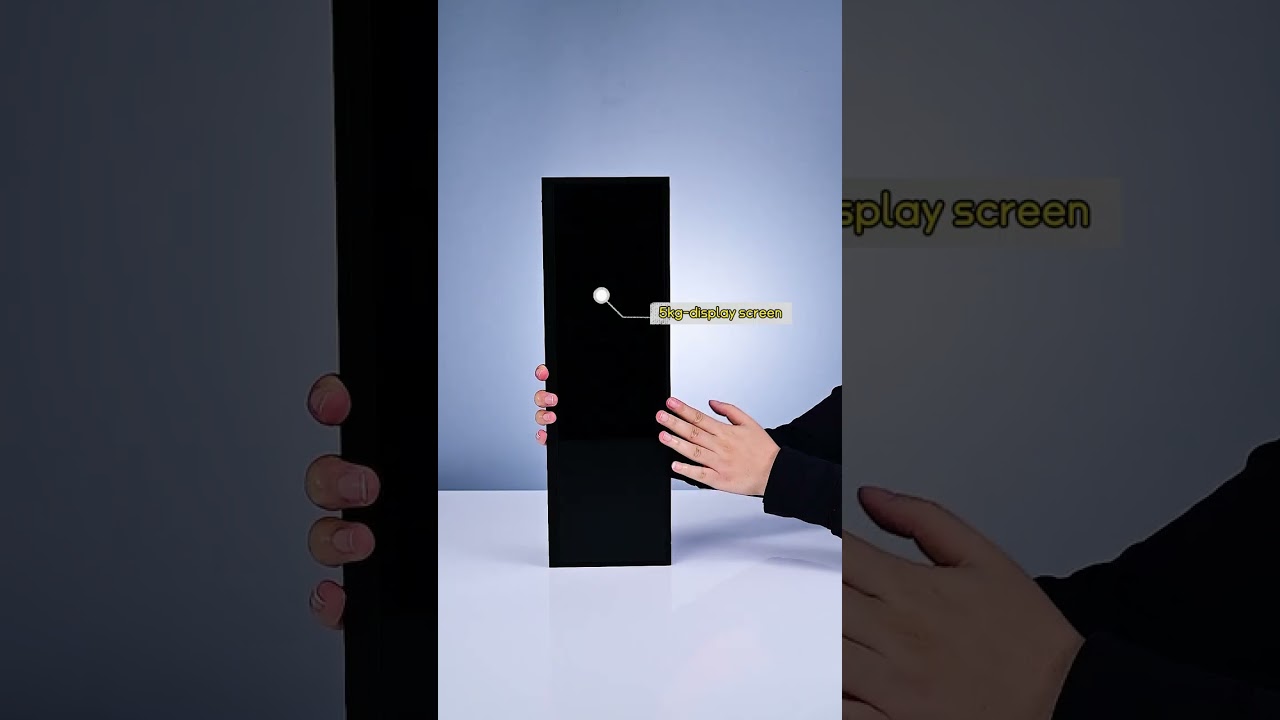
In automotive electronics manufacturing, repeat positioning accuracy, gripping consistency, and vibration control all directly affect process reliability.Especially in automated lines operating continuously at high takt times, even a small positioning deviation can lead to secondary collisions, alignment issues, or downstream interruptions.As automotive displays continue becoming larger, thinner, and more integrated into the driving experience, manufacturing systems are also being pushed toward a new standard:
not only faster automation, but more controlled automation.In many ways, the future of intelligent manufacturing is not simply about stronger machines or higher speed.It is about whether automation systems can interact with delicate products in a more precise, stable, and controlled way.Sometimes, the most advanced manufacturing capability is not force — but controlled gentleness.